The World’s First Real World Asset Token
Backed by rare gem Fei Cui (Burmese Jadeite Type A) — 100% natural Premium Collection, untreated jadeite and bridging timeless value and digital innovation.
Explore Specimens
Why Choose jadeite holdings
From the historic Cosmo Ltd. Burmese jadeite acquisition period (1970s–1980s), associated with the Tamiya holdings.
Jadeite Global Holdings is treasured worldwide for its unparalleled quality, exquisite translucency, and rich cultural heritage. Each gemstone is carefully sourced from old BURMA mine, now Myanmar, in the 1970's by Mr. Tamiya/ Cosmos, preserving its authenticity and timeless value. Unique 1 of a Kind collection goods.
The Legacy of Stone:
Tamiya, Alosi, and the Journey of Fei Cui
In the world of gemstones, few materials carry the mystique, rarity, and spiritual reverence of Burmese jadeite — known across Asia as Fei Cui, the “kingfisher jade.” Unlike diamonds, which are mined across continents, the finest jadeite on earth comes from one remote region in northern Myanmar, where geological forces created translucent green material of extraordinary beauty. Gemological authorities such as the Gemological Institute of America (GIA) recognize Fei Cui as a polycrystalline jadeite aggregate prized primarily for its color, translucency, and texture — qualities that determine its extraordinary value in global markets. The highest category, Type-A jadeite, is completely natural and untreated, making it the most coveted and scarce form of jade in existence.
During the late 20th century, when Burmese jadeite flowed through select international trading channels, a Japanese-connected trading network known as Tamiya operated in the rarefied world between mines, exporters, and private collectors. In that era, relationships mattered more than contracts, and trust was the currency that moved stones across oceans. It was within this environment that Joseph Alosi encountered Tamiya — not simply as a buyer, but as a man recognized for vision, integrity, and belief in the future value of Fei Cui. What passed between them was more than a transaction. It was the transfer of opportunity — a cache of jadeite rough and semi-finished stones originating from historic Burmese sources, material that would later prove to possess the characteristics sought by collectors: translucency, natural structure, and untreated authenticity.
For Alosi, the jade was never merely inventory. It became a life chapter — a physical connection between continents, cultures, and destiny. Over time, laboratory verification would confirm what intuition had already suggested: the stones belonged to the rare category of natural jadeite recognized by modern gemology. Today, with GIA documentation supporting authenticity and origin characteristics, the Fei Cui represents not only mineral wealth but historical continuity — from the mines of Myanmar, through international trade networks, to a private American steward who preserved the material for decades. In a world where most jadeite disappears into private Asian collections, the survival of this cache outside traditional markets is itself remarkable.
The story of Tamiya and Alosi is therefore not simply about gemstones. It is about timing, trust, and legacy. One man recognized potential in another, and through that recognition a collection crossed borders and generations. Now, as global demand for fine jadeite continues to exceed supply — with Myanmar still producing the majority of the world’s highest-quality material — the stones stand as silent witnesses to a journey that began long before certificates, valuations, or markets. They are fragments of geological time, carried by human faith from one guardian to the next.
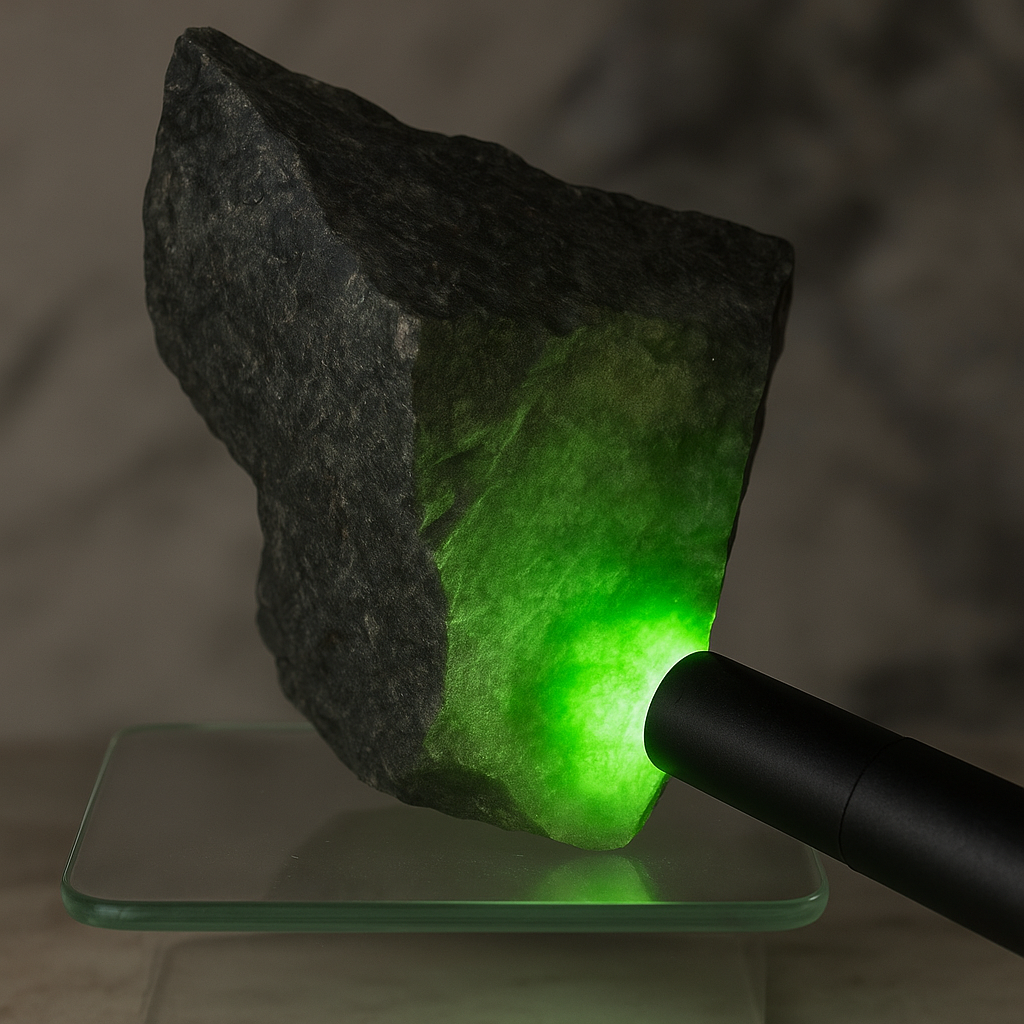
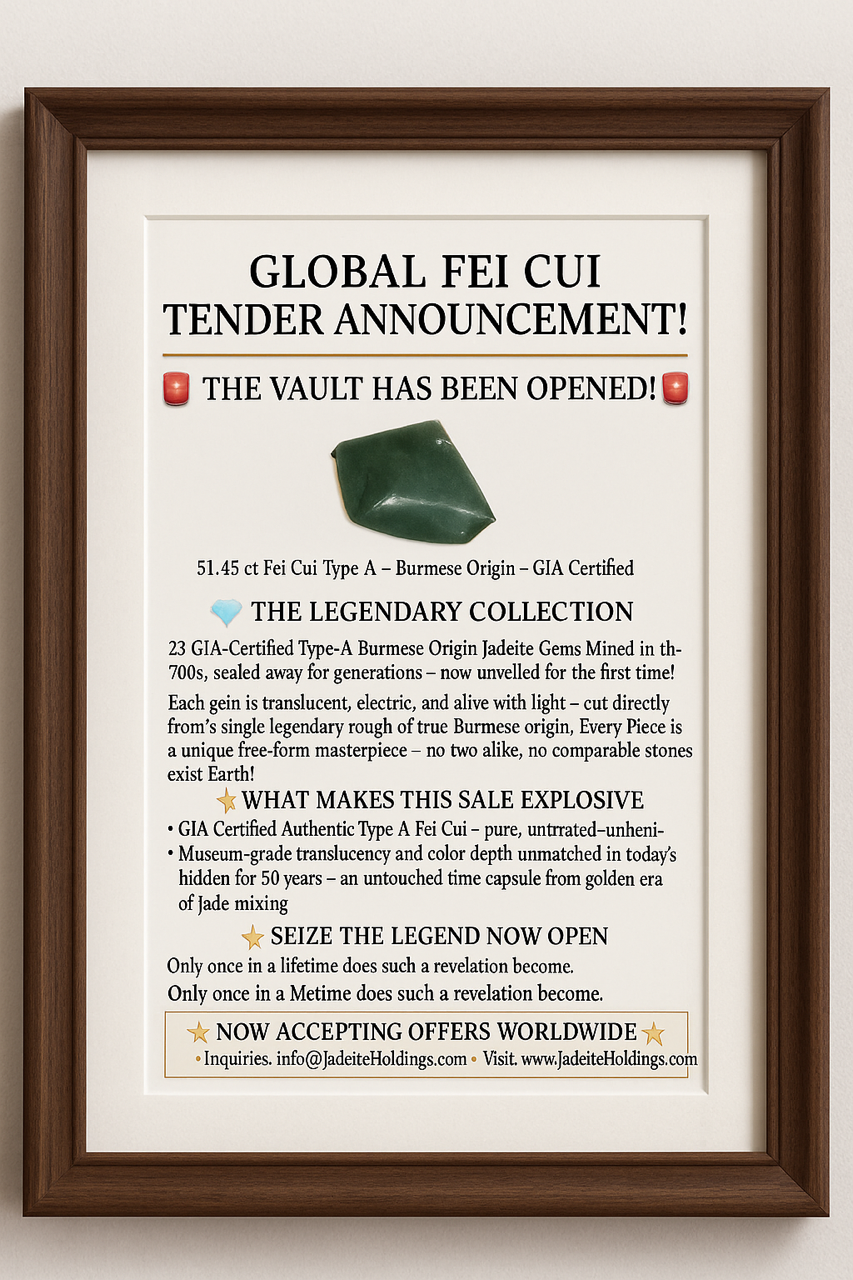
This is a 686 gram rough Fei Cui GIA Type A has been sold.
The image shows a rough, uncut piece of jadeite (jade) being tested with a strong flashlight (torch). When the bright light is shone through the stone from one side, a vivid, translucent emerald-green area glows intensely, indicating high-quality jadeite with good transparency and color. The rest of the rock appears dark gray-green and opaque, typical of raw jadeite rough before it is cut and polished. This strong green translucency under focused light is a classic sign of fine imperial jadeite or similar high-grade material.
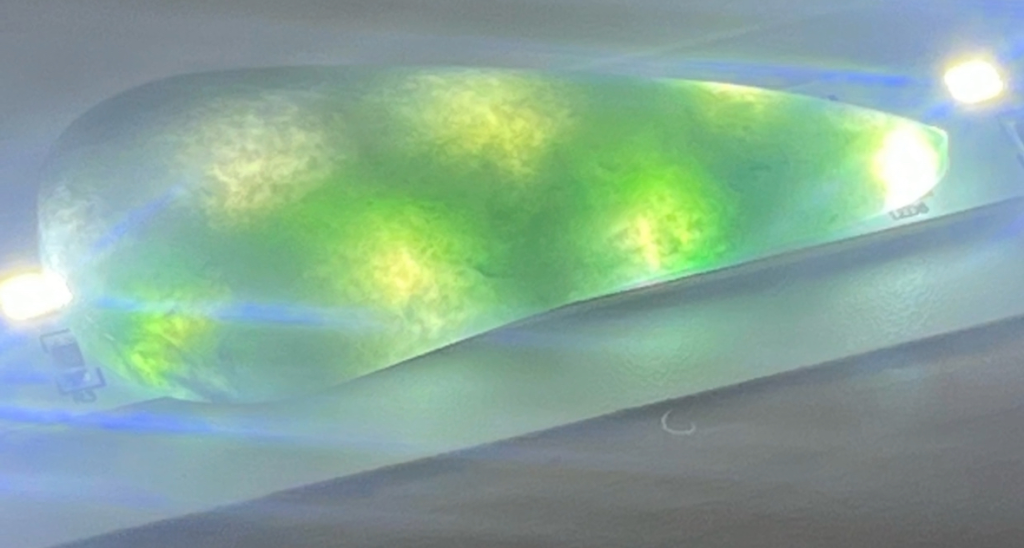
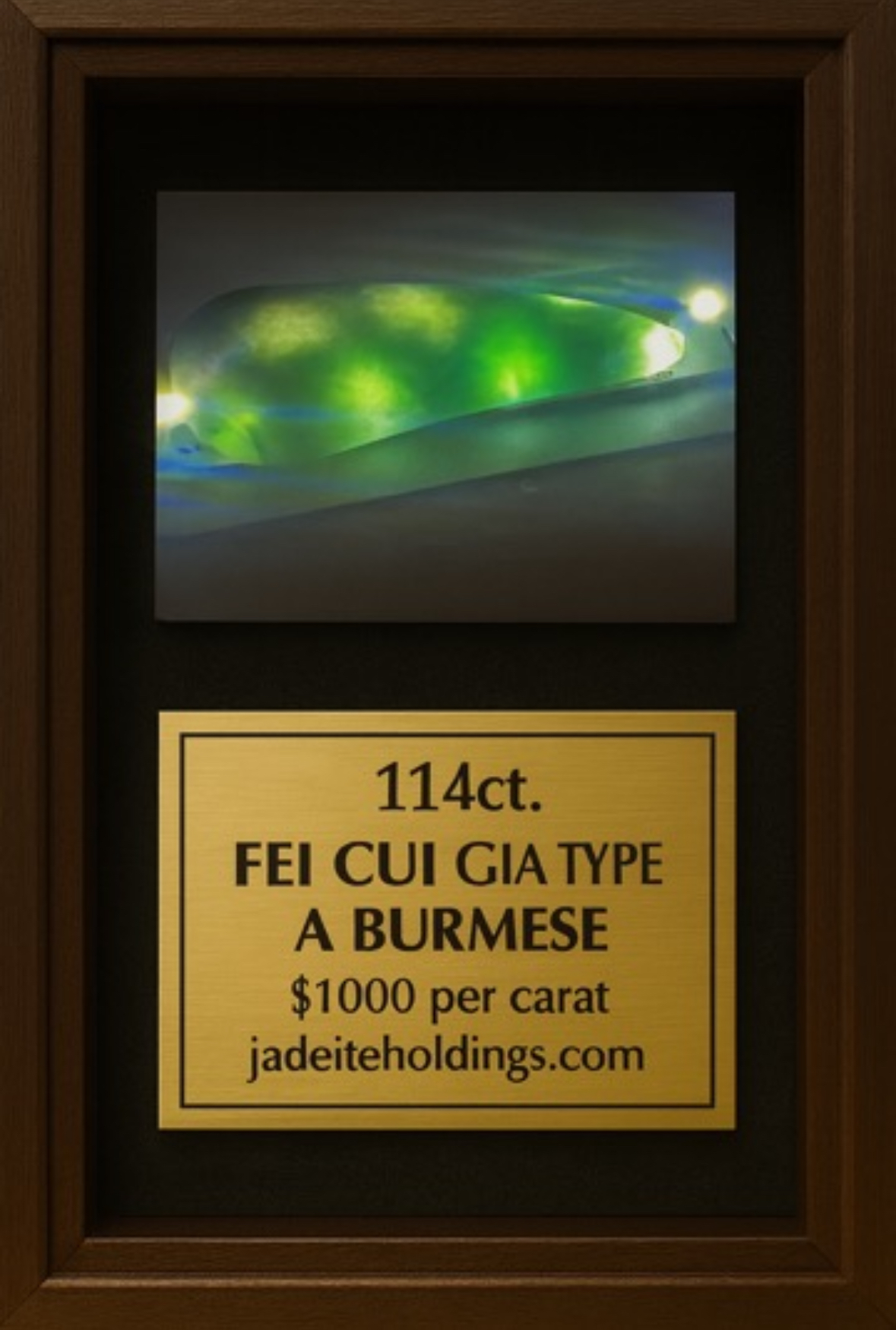
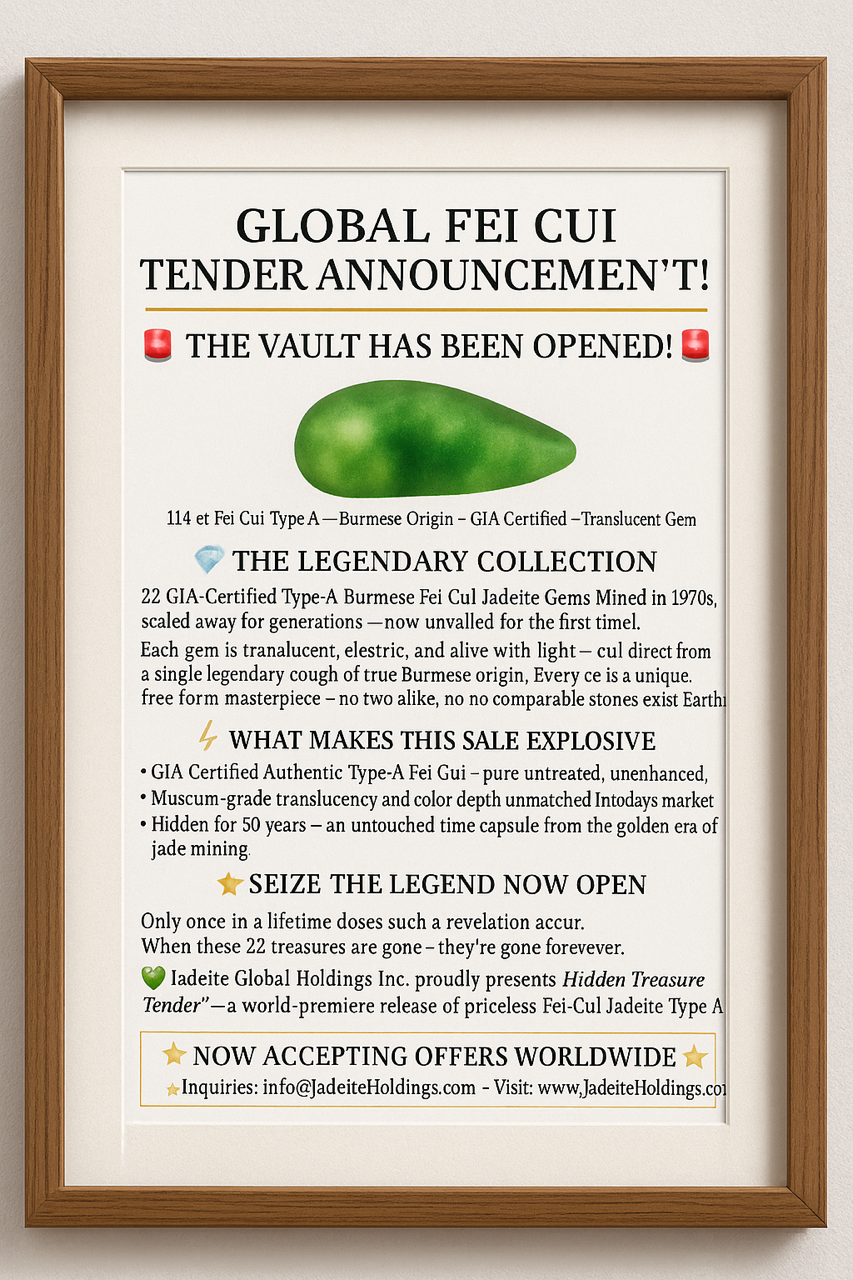
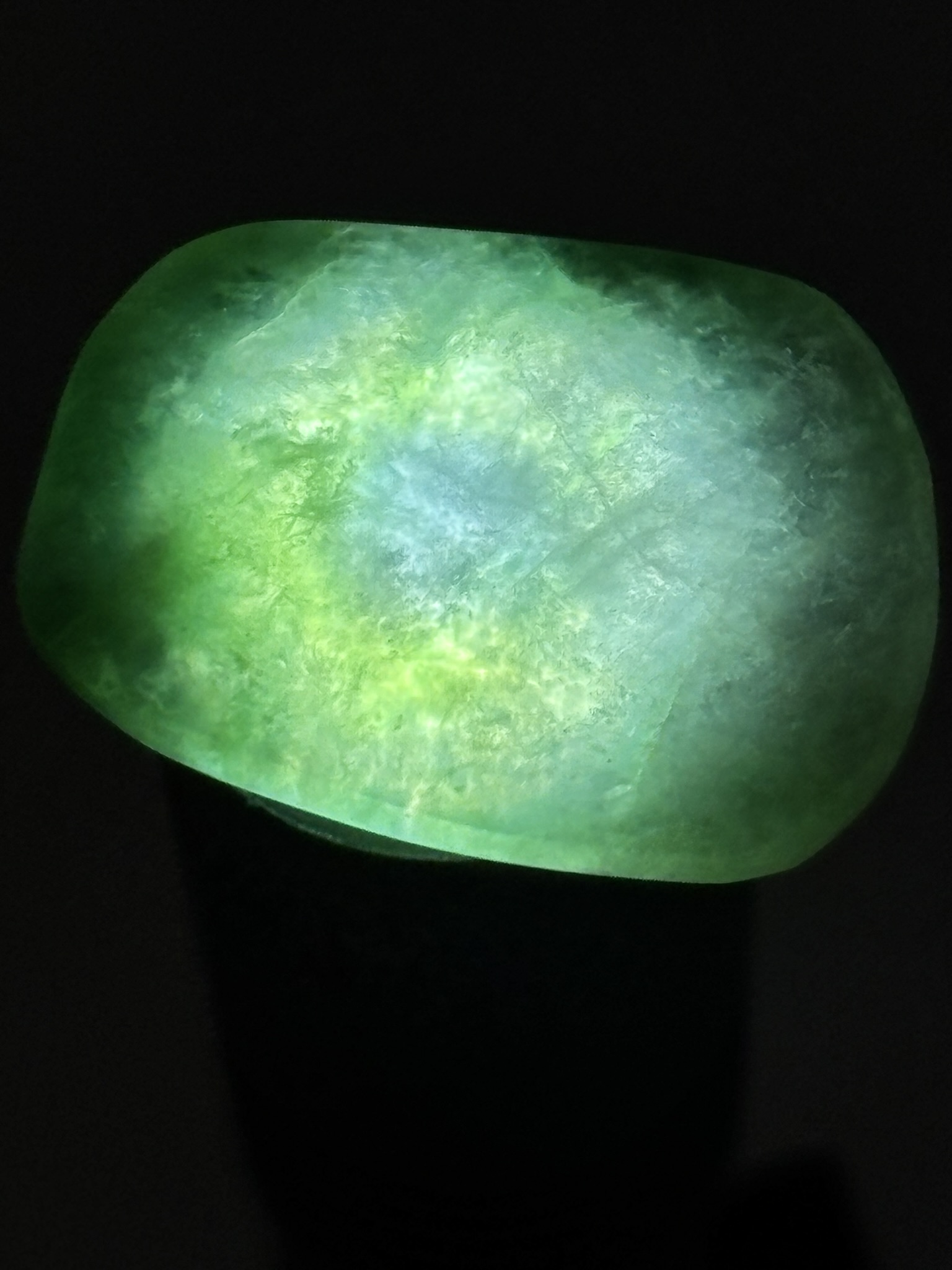
114ct. Fei Cui GIA Type A Translucent
This image shows a polished slice or cabochon of jadeite held up to a very strong light source (likely a high-powered LED torch) from behind.The stone is highly translucent, with a rich, vibrant emerald-to-apple green color that glows intensely when backlit. Multiple bright spots of light are visible passing through the thinnest and clearest areas, creating a luminous, almost jelly-like appearance. The color is even and saturated, and the high transparency combined with this vivid green hue indicates top-grade (imperial or high commercial-grade) jadeite jade.This level of translucency and color under strong transmitted light is a hallmark of the finest Burmese jadeite.
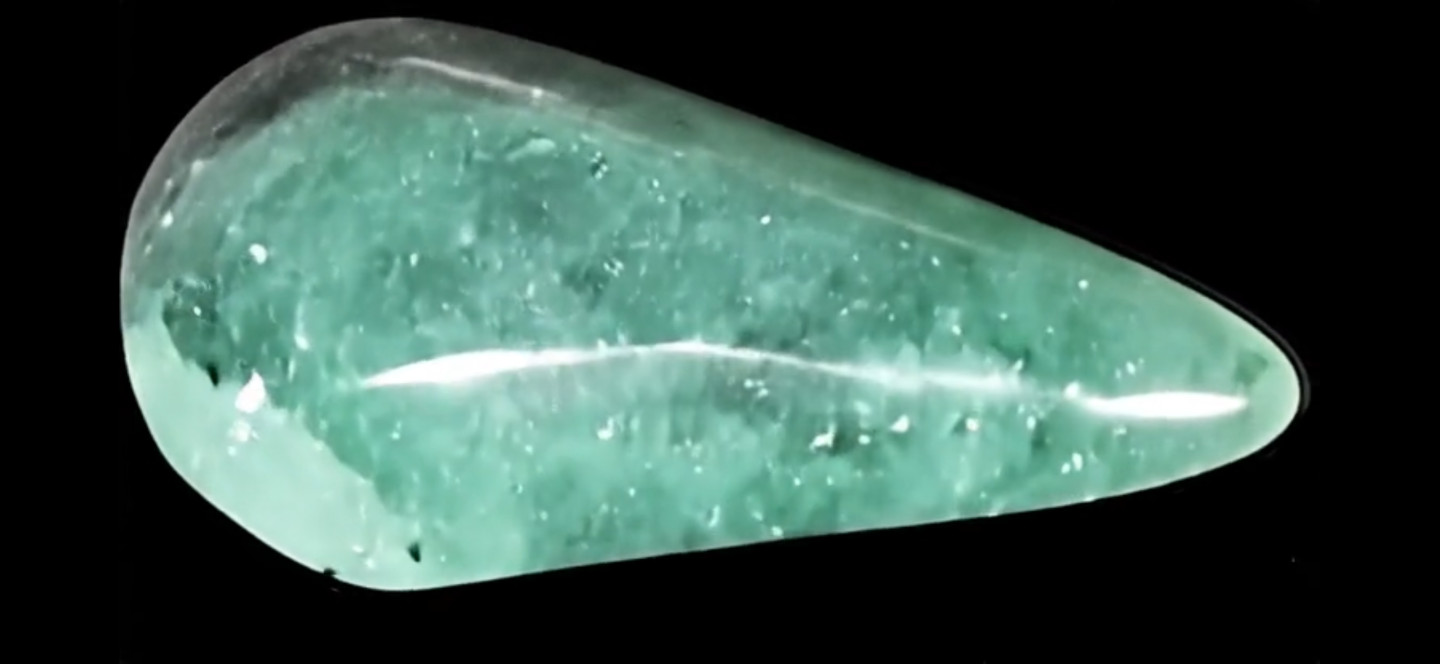
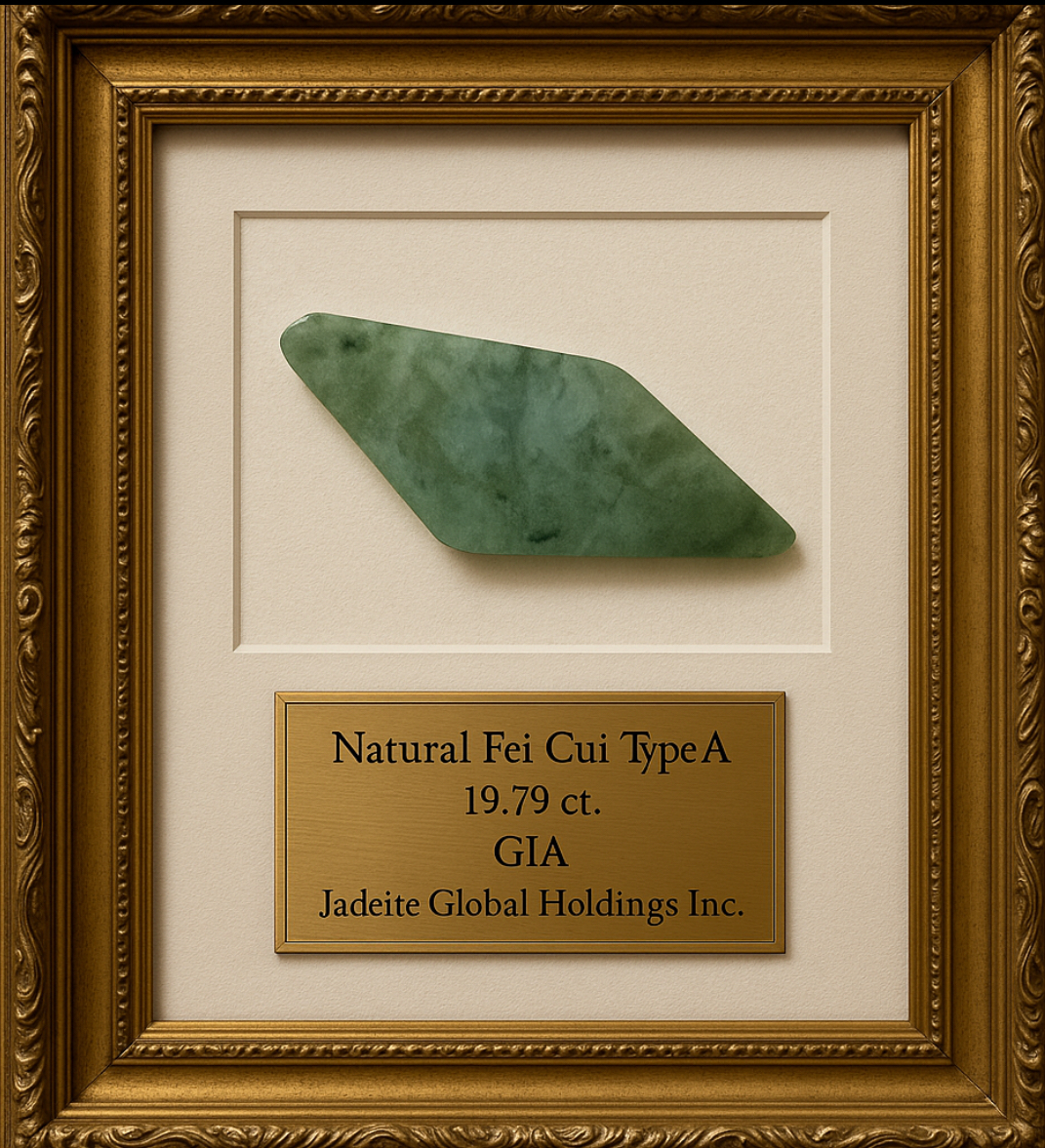
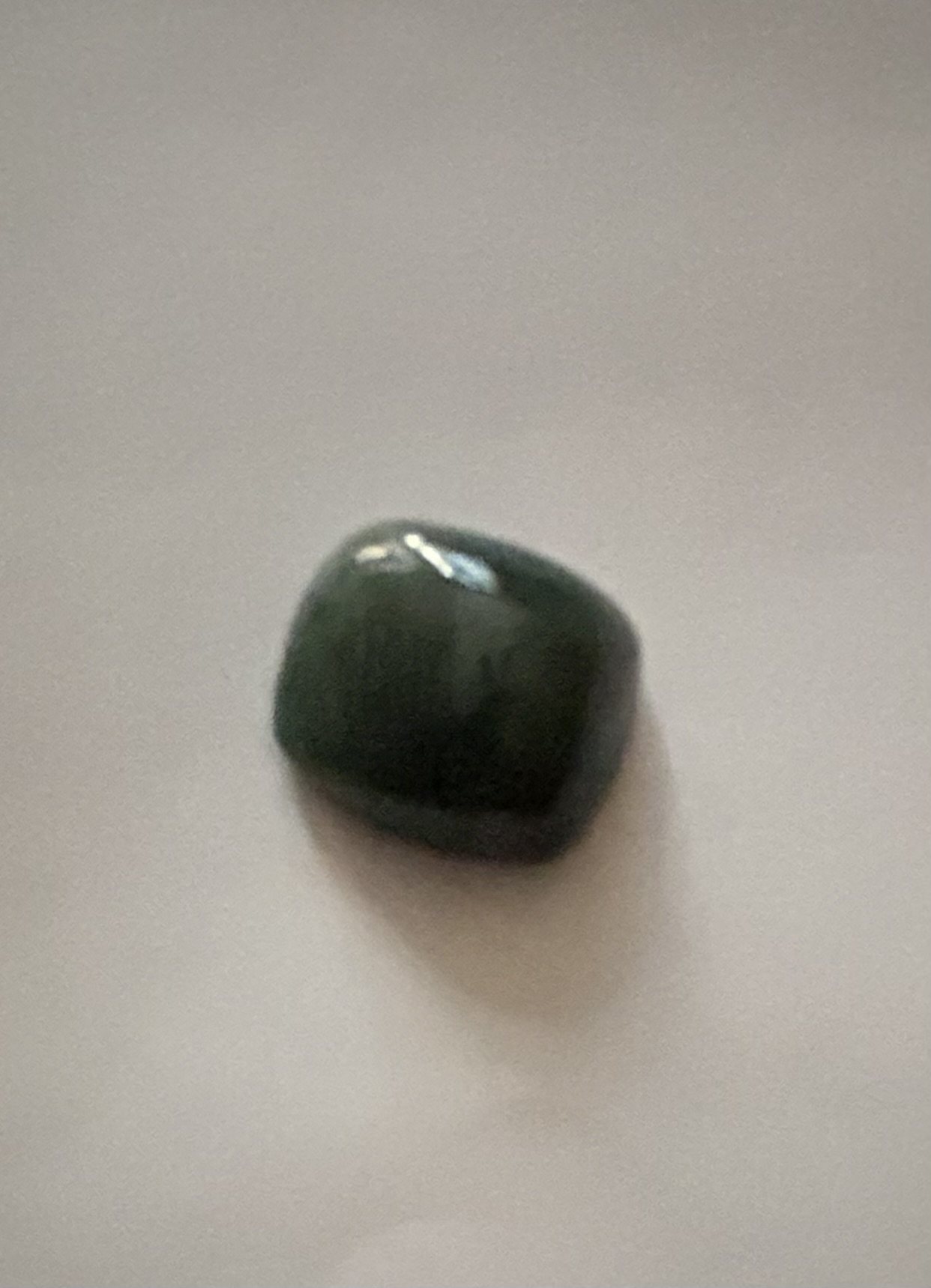
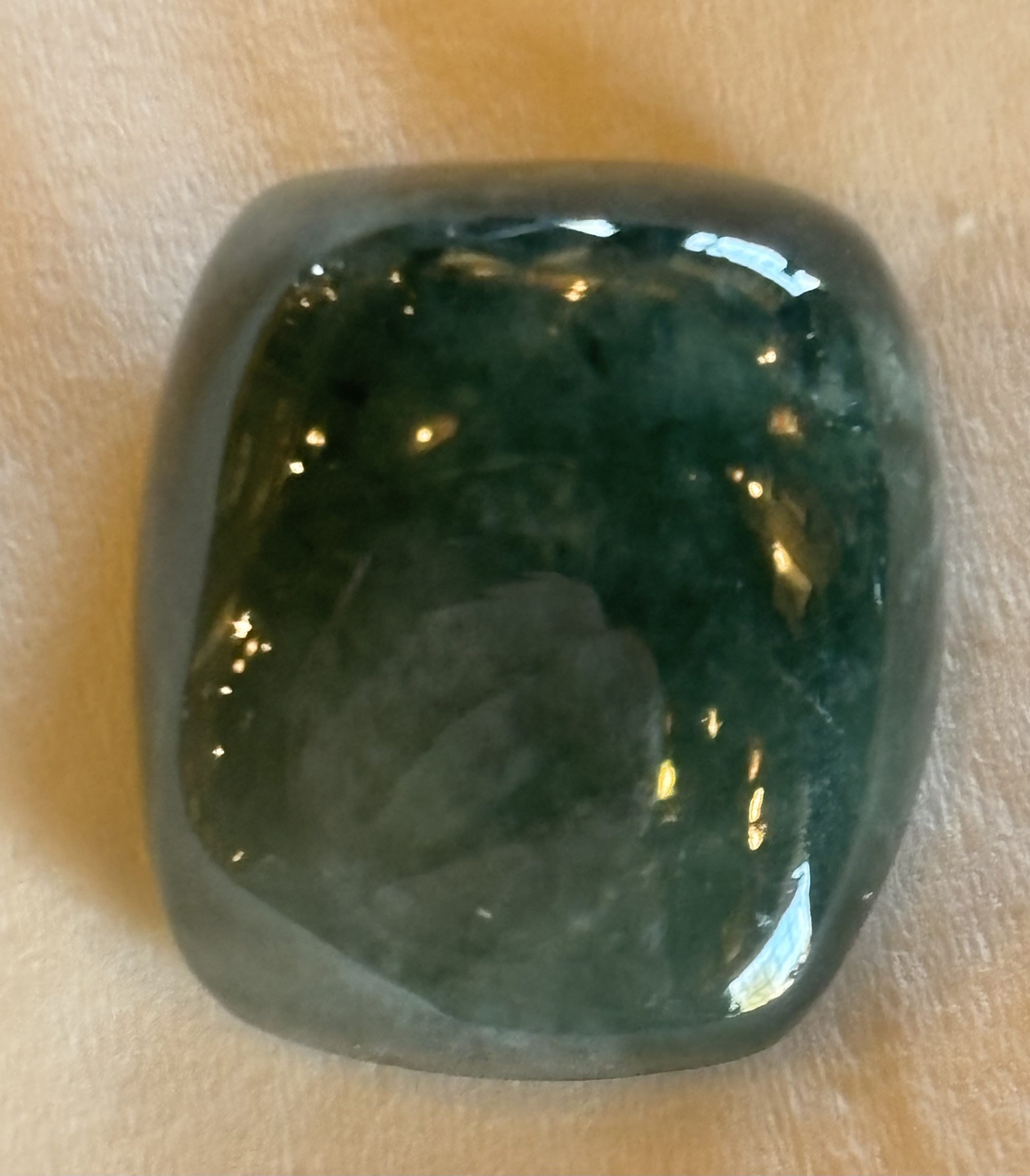
114ct. Natural Light
This is a 114-carat polished jadeite cabochon (tear-drop/pear shape) photographed against a black background with strong directional lighting.Key characteristics:
- Color: Very pale icy green with subtle bluish-green undertones, transitioning to almost colorless at the thinner tip and edges.
- Transparency: Extremely high – glass-like (often described as “icy” or “glassy” in the jade trade).
- Texture: Fine-grained with a beautiful crystalline sparkle throughout; small scattered bright crystalline inclusions catch the light like tiny diamonds inside the stone.
- Clarity: Very clean overall, with only minor natural inclusions and one faint whitish “cotton” streak visible in the lower half.
- Polish: Mirror-like, vitreous luster.
This piece represents classic high-end “icy” jadeite (????). Although the green is very light and delicate rather than vivid emerald, the combination of exceptional transparency, fine texture, and clean clarity places it in the luxury/commercial-to-high-commercial grade range. In the current market, stones of this size (114 ct), icy texture, and glassy transparency – even in pale tones – are highly prized, especially for mounting in high-jewelry settings where the cool, luminous quality is preferred over saturated color.
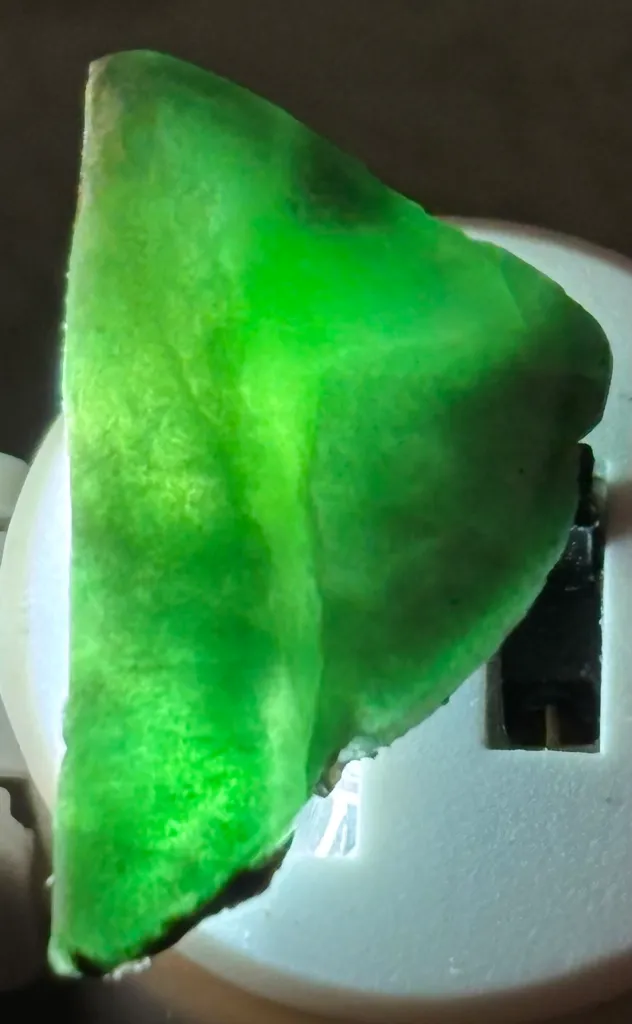
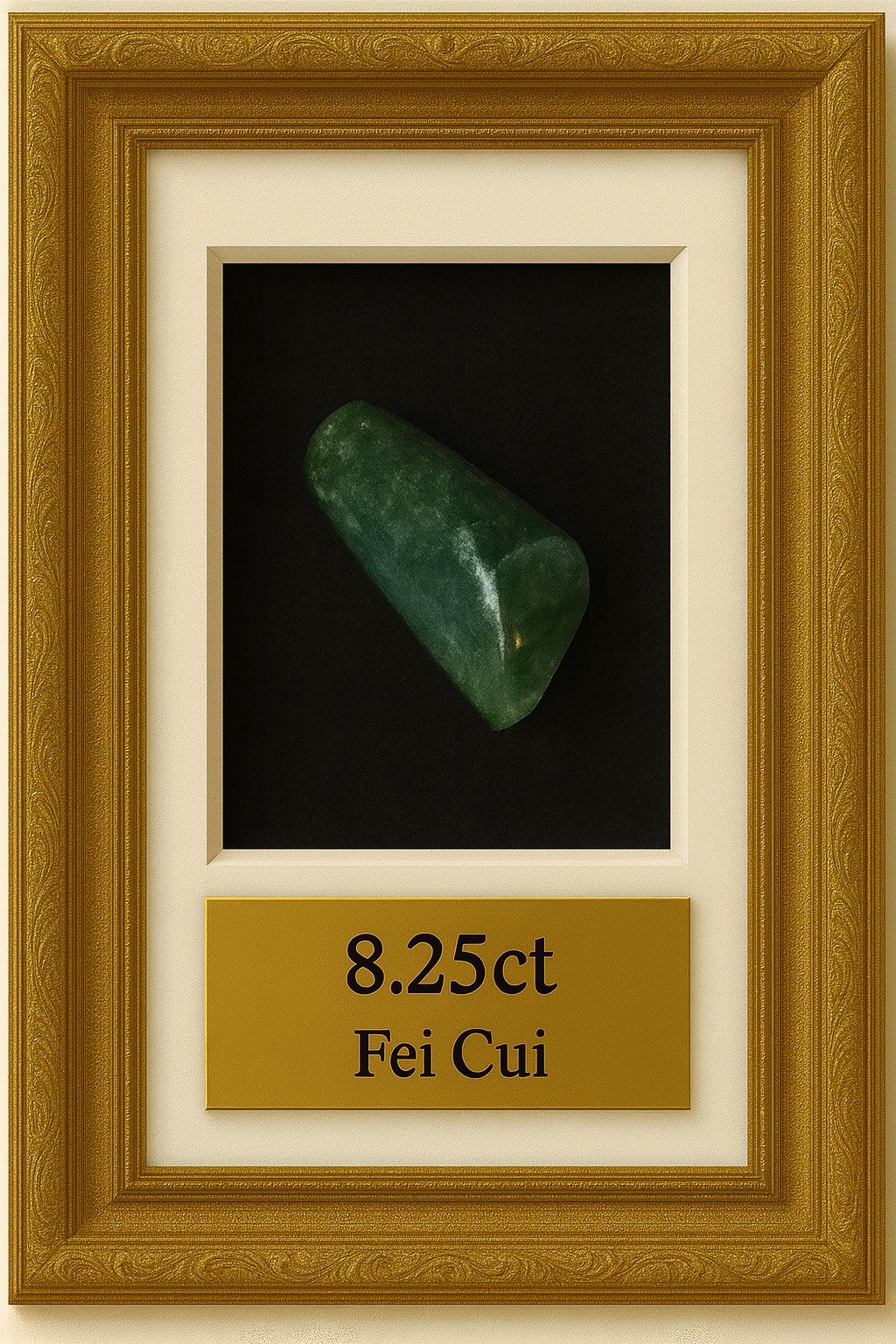
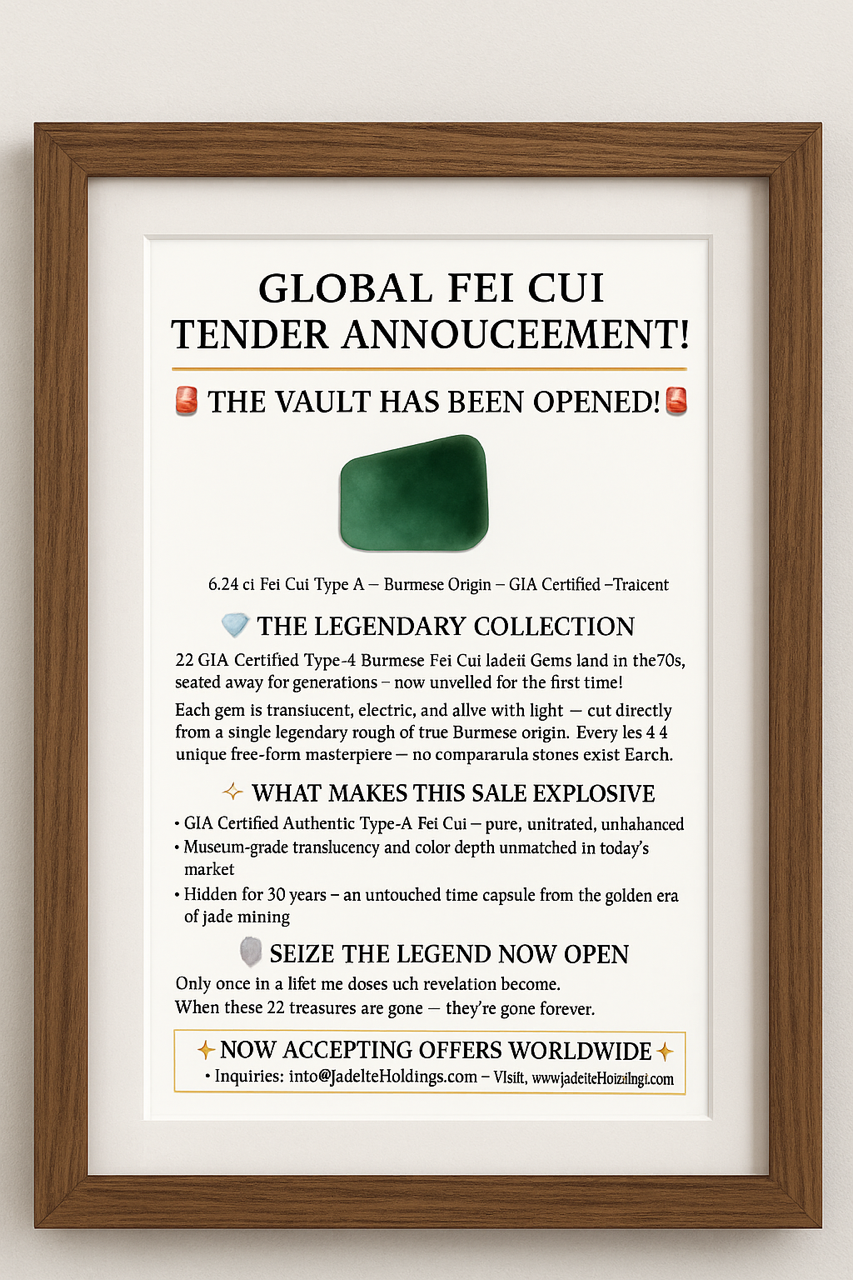
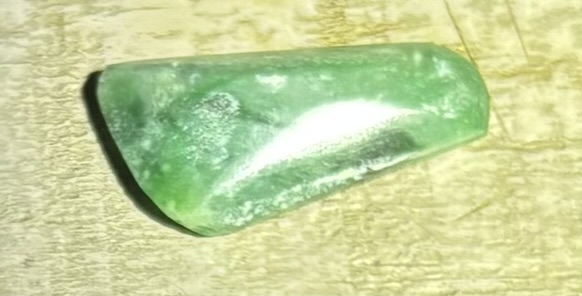
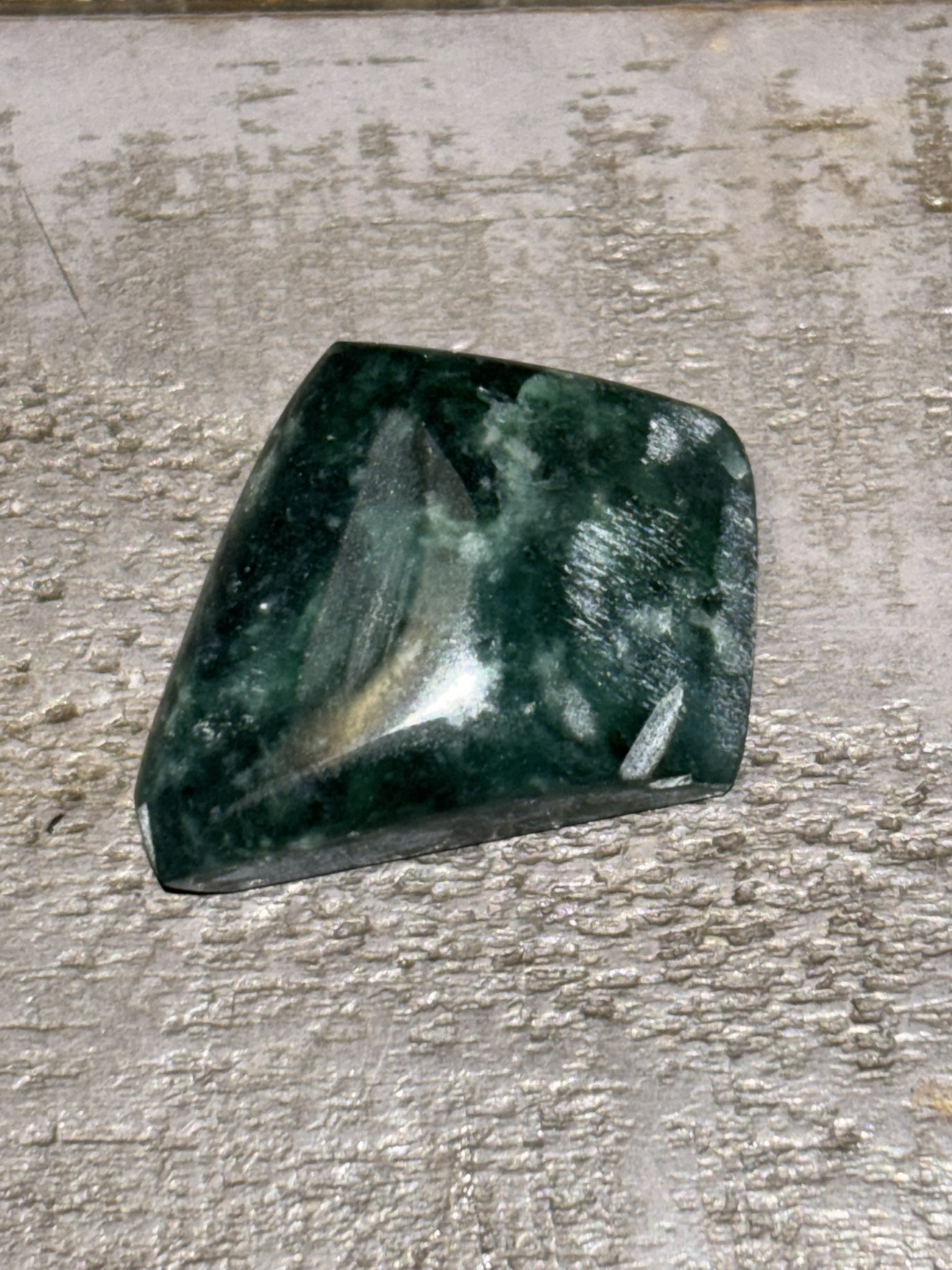
5ct. Fei Cui GIA Type A Translucent
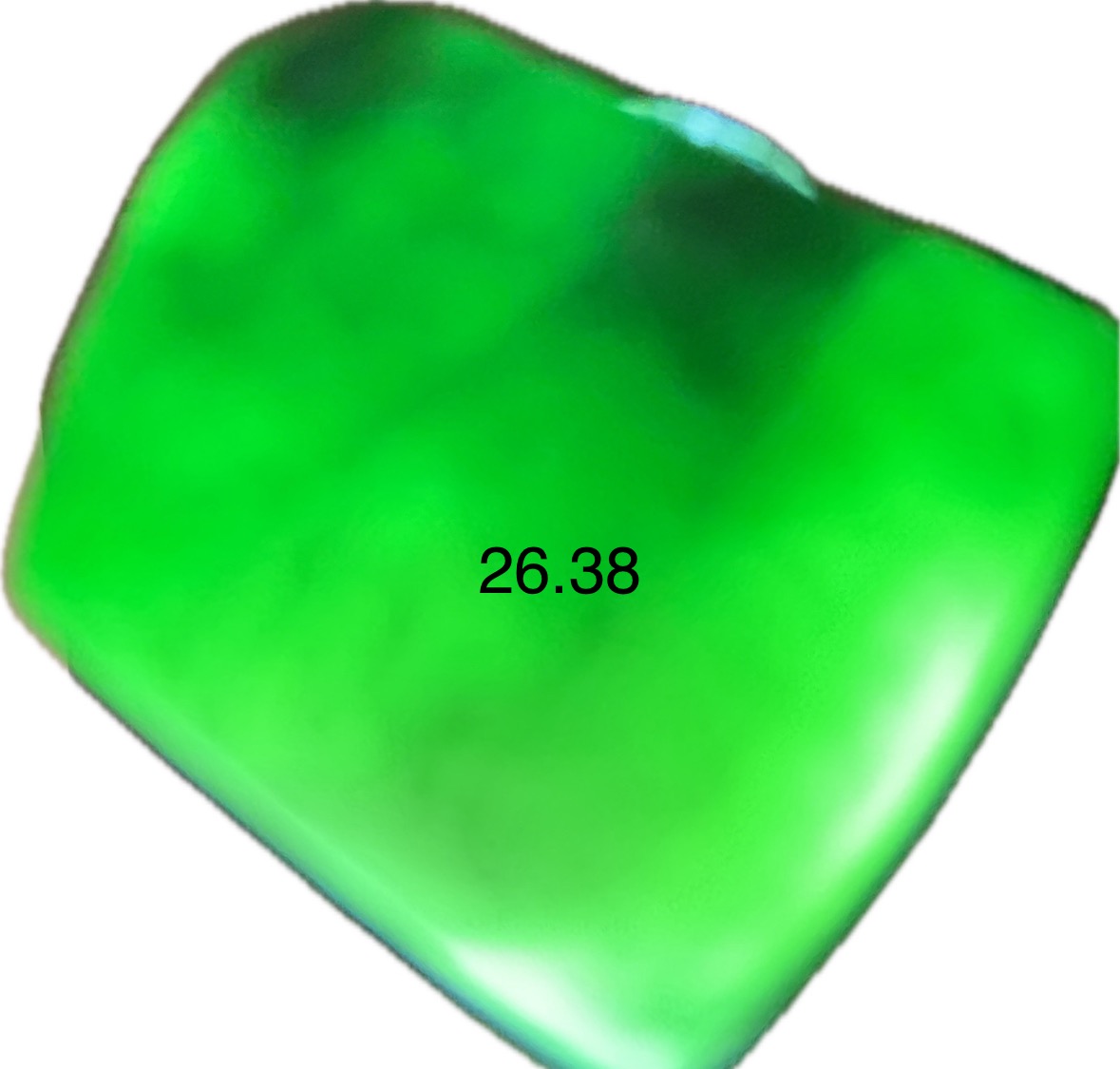
This is a small, semi-polished free-form slice or fragment of jadeite being tested with a strong flashlight from behind.
- Color: Bright, vivid apple-green to emerald-green – pure, saturated, and even throughout.
- Transparency: Very high for its thickness; the light penetrates fully and creates a rich, glowing green effect with almost no dark or cloudy patches.
- Texture: Slightly waxy to vitreous surface (still has some rough, unpolished edges and a natural skin on one side).
- Clarity: Clean, with only minor natural inclusions visible along the edges.
This piece shows classic high-quality “glass-type” or “semi-glass” jadeite (???/???) with excellent color and translucency. The intense, cheerful green combined with the strong light transmission indicates top commercial to near-imperial grade material. Even though it is small and still rough in parts, the combination of vivid color and high transparency makes it very valuable – exactly the kind of piece cutters look for when trying to extract high-value cabochons or beads.
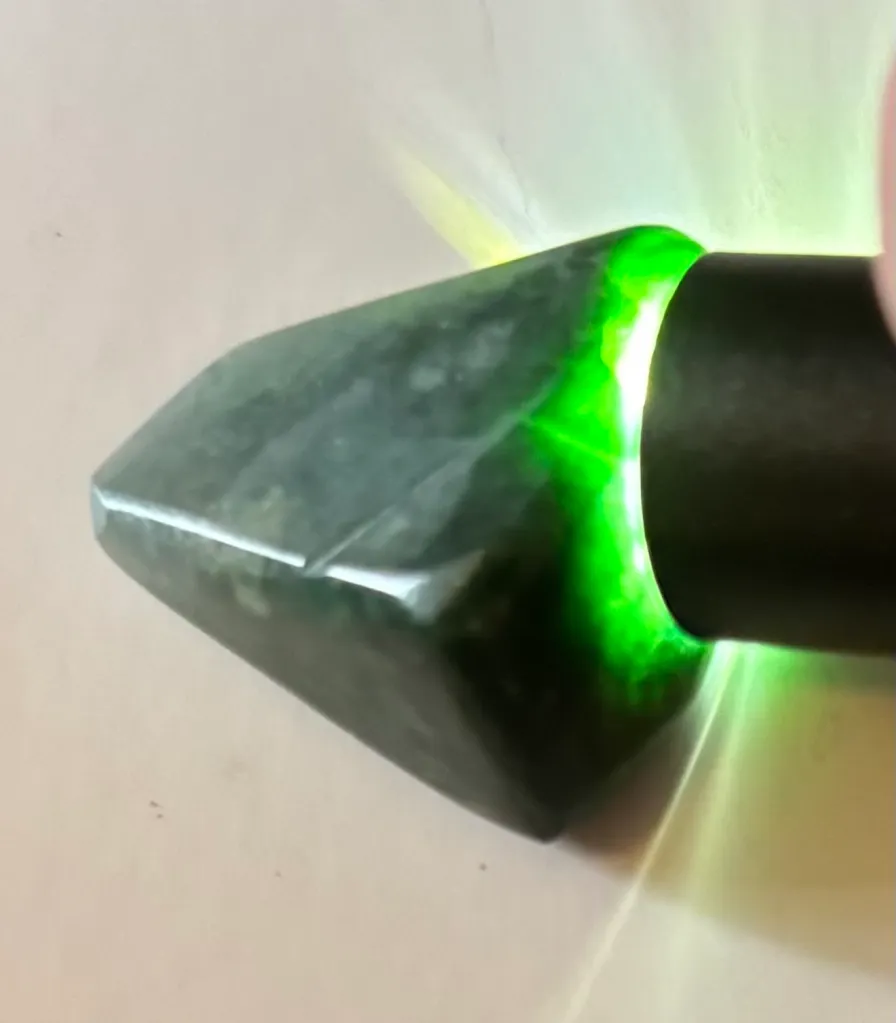
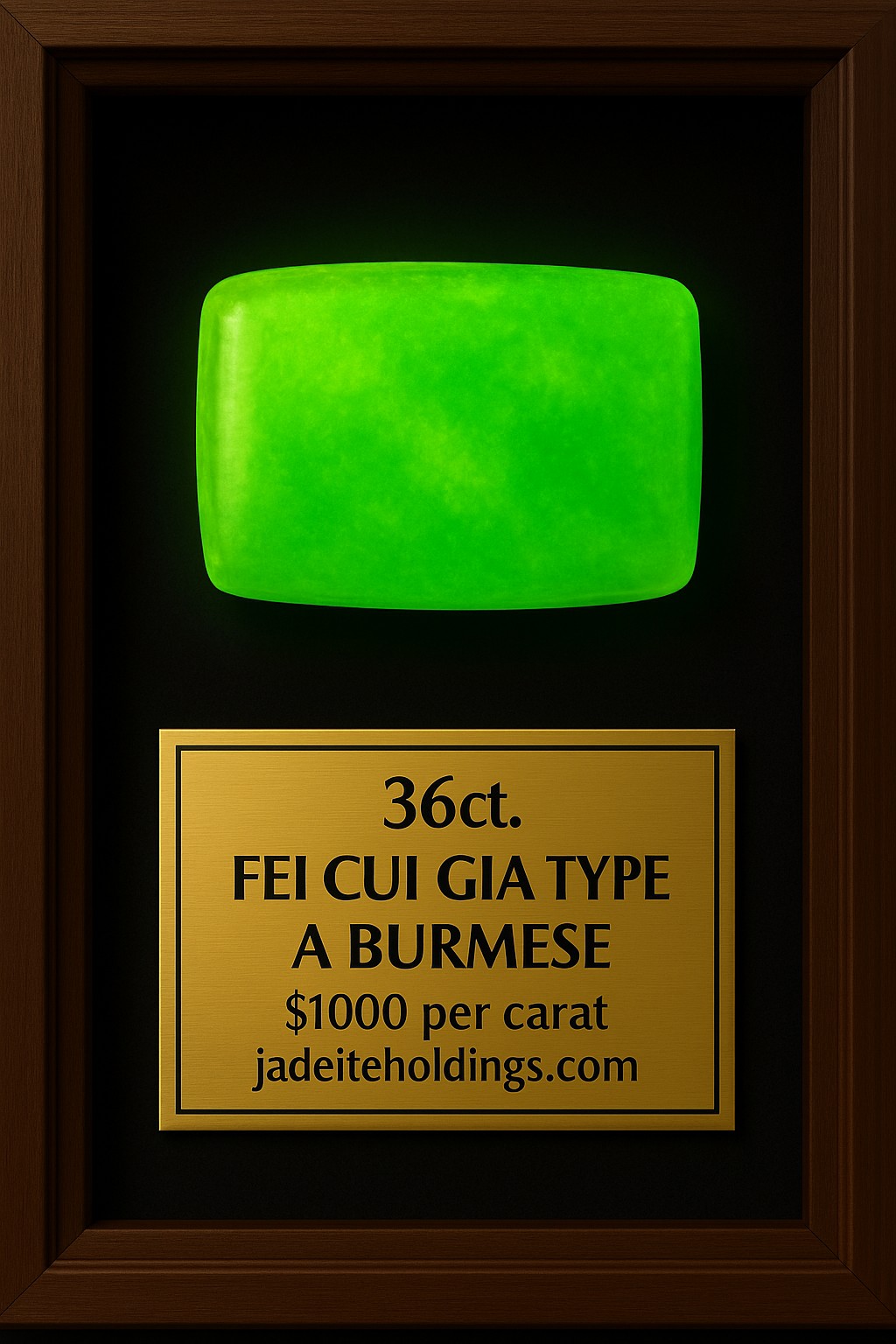
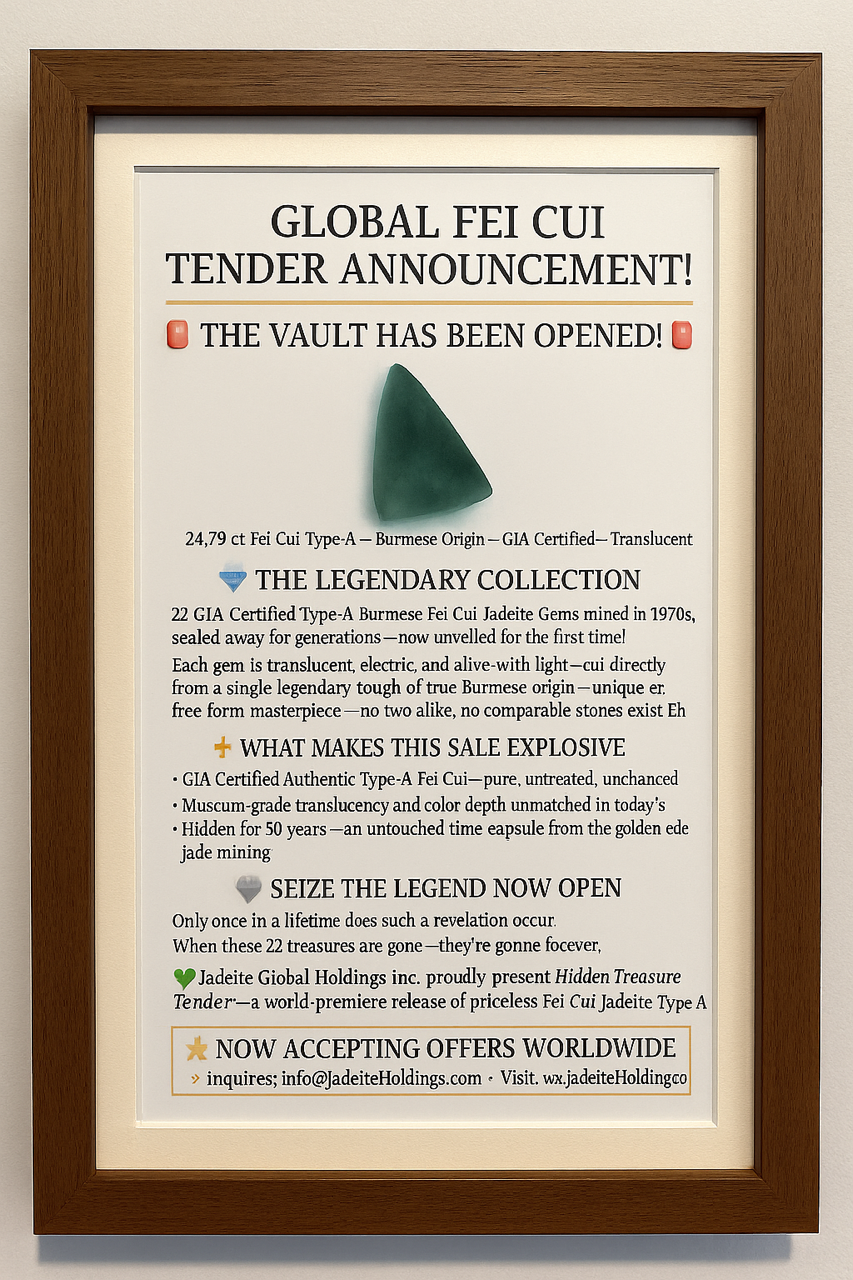
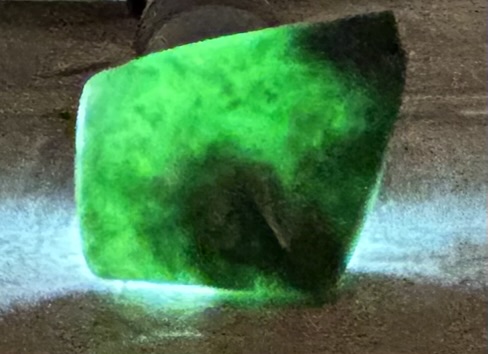
36ct Fei Cui Type A GIA Translucent
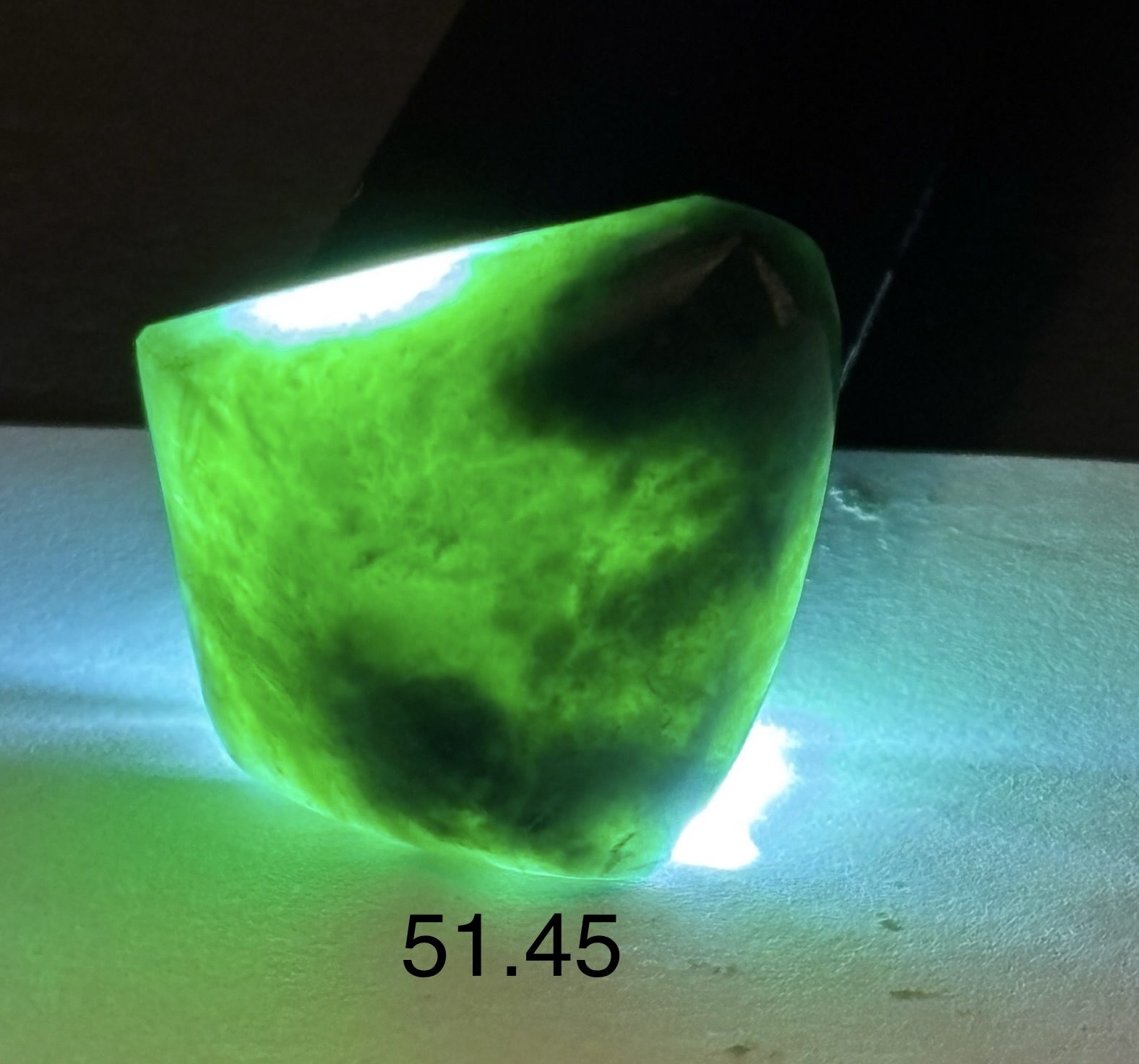
This image shows a partially polished piece of jadeite rough being tested with a strong flashlight pressed directly against one edge.
- Exterior: Dark grayish-green, almost black, with a waxy, matte surface – typical raw skin of jadeite rough.
- Interior (revealed by the torch): An intense, bright emerald-green core that lights up vividly where the beam enters. The green is pure, rich, and highly saturated, with a glowing, almost electric quality.
- Transparency: Excellent in the illuminated area – the light travels a significant distance through the stone before scattering, indicating very good translucency in the green portion.
This is a classic example of high-grade Burmese jadeite rough with strong color concentration hidden under a dark skin. The dramatic contrast between the dull exterior and the brilliant green interior is exactly what jade gamblers and cutters look for – a potential “big win” piece that could yield imperial-grade material once the skin is fully removed and the stone is properly cut. Very exciting material.
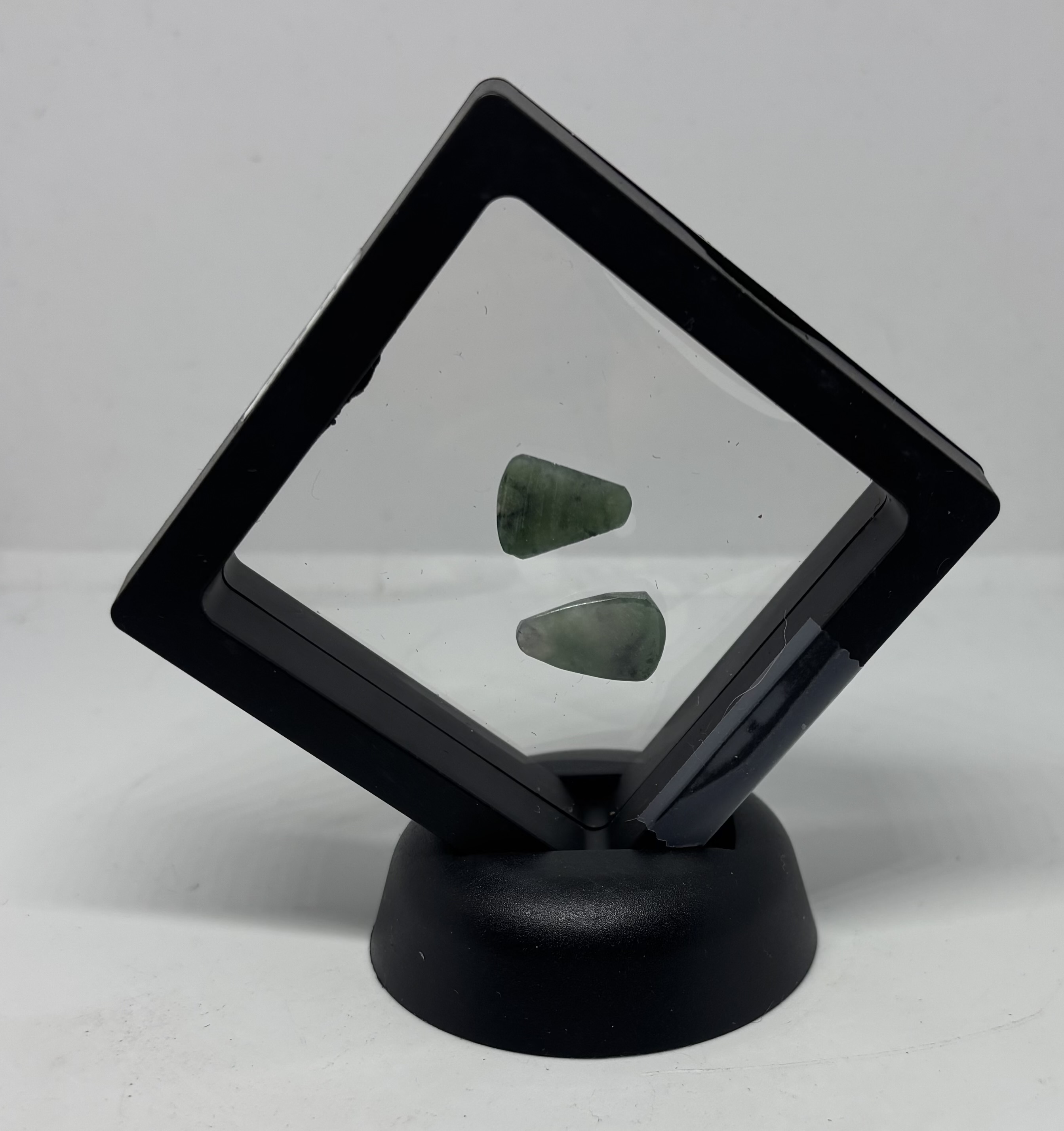
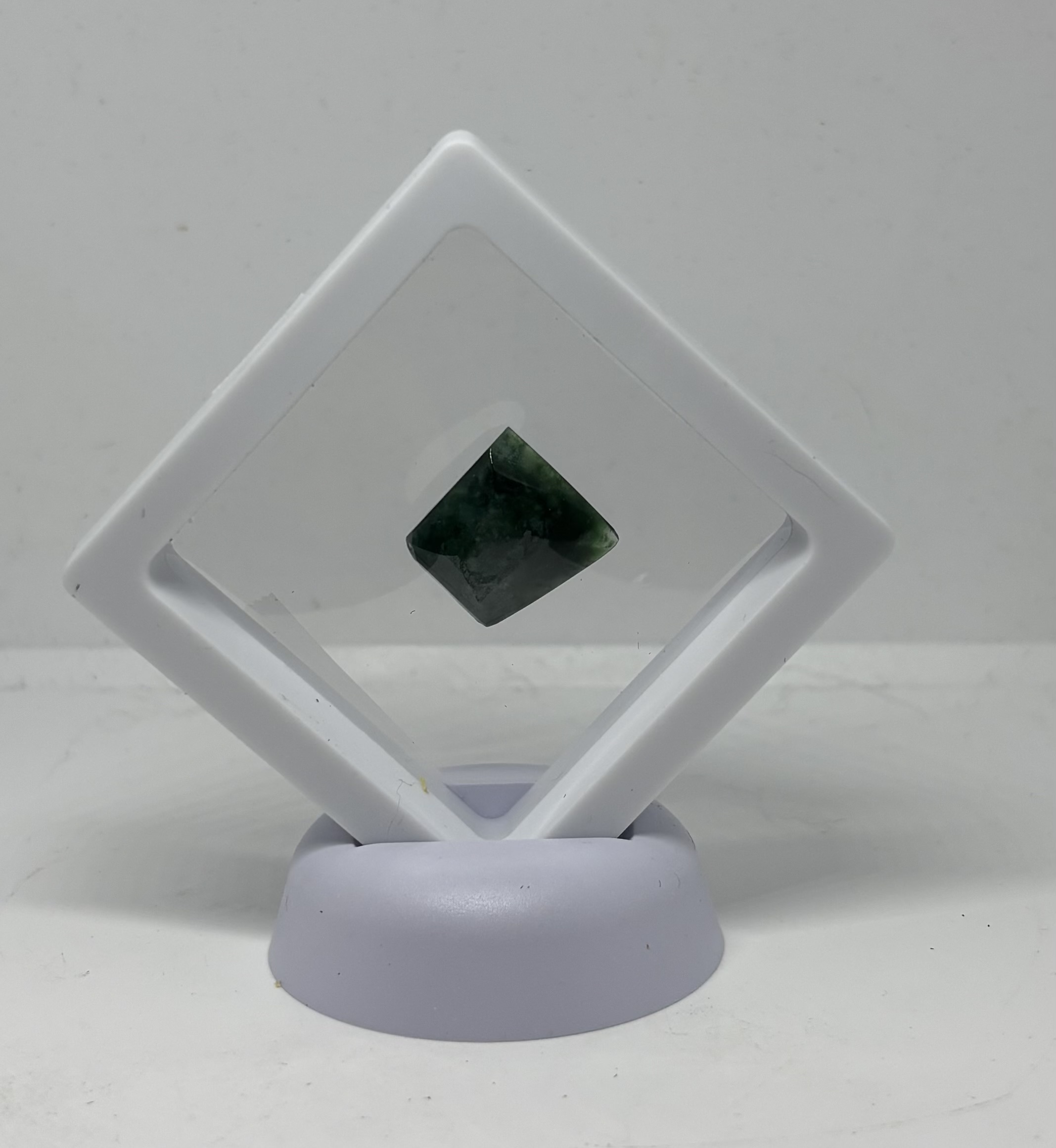
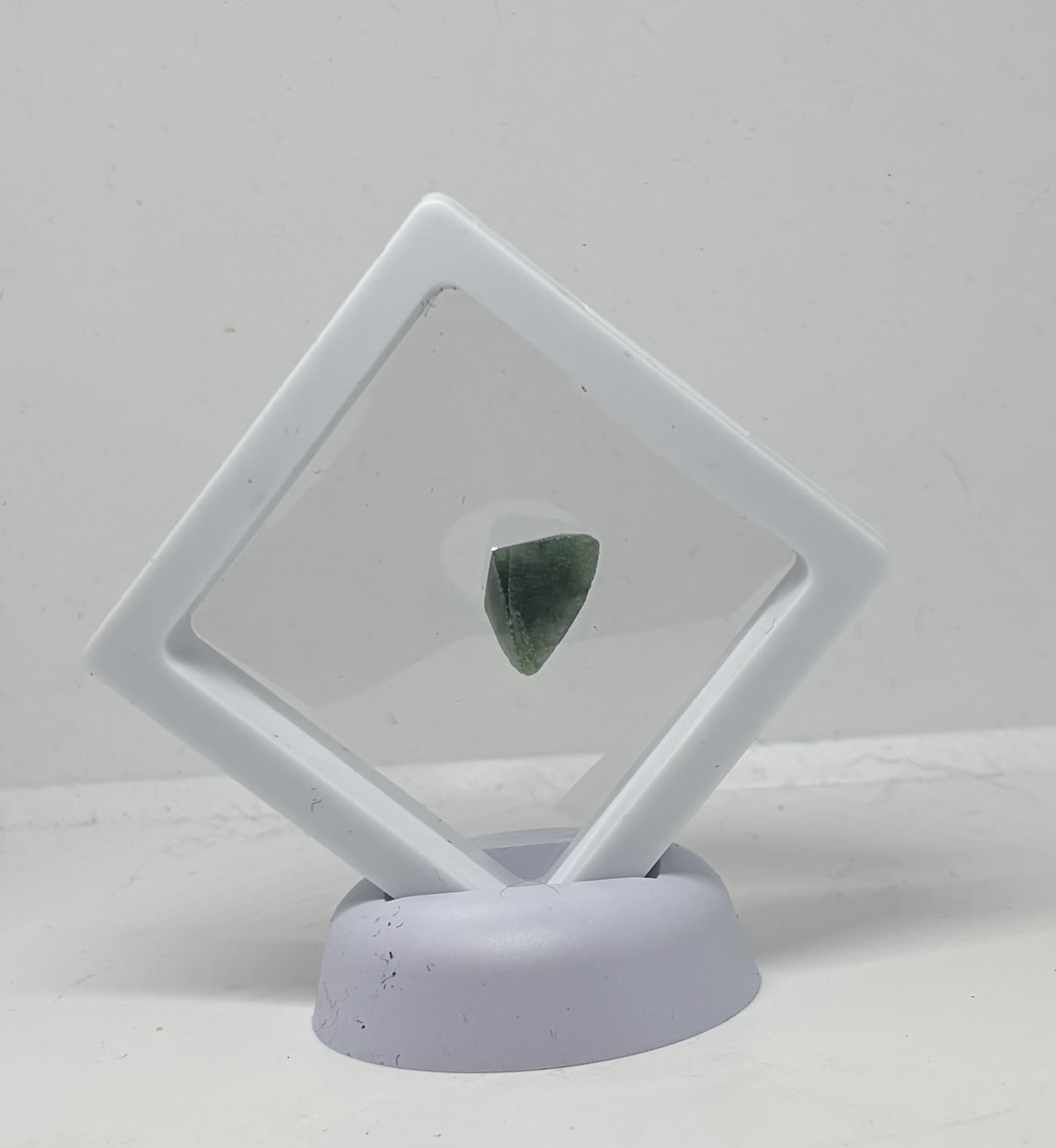
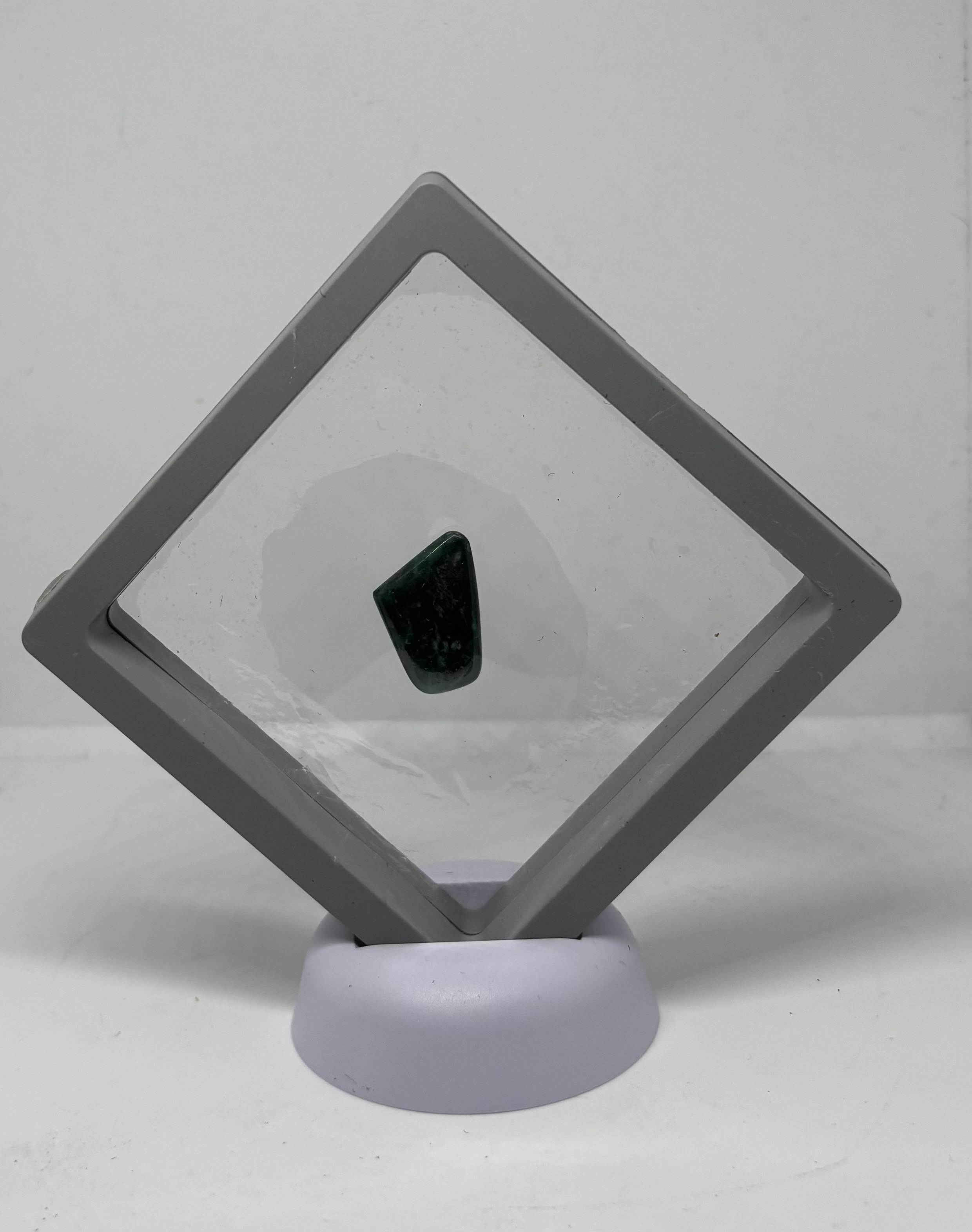
Our Jadeite Specimens
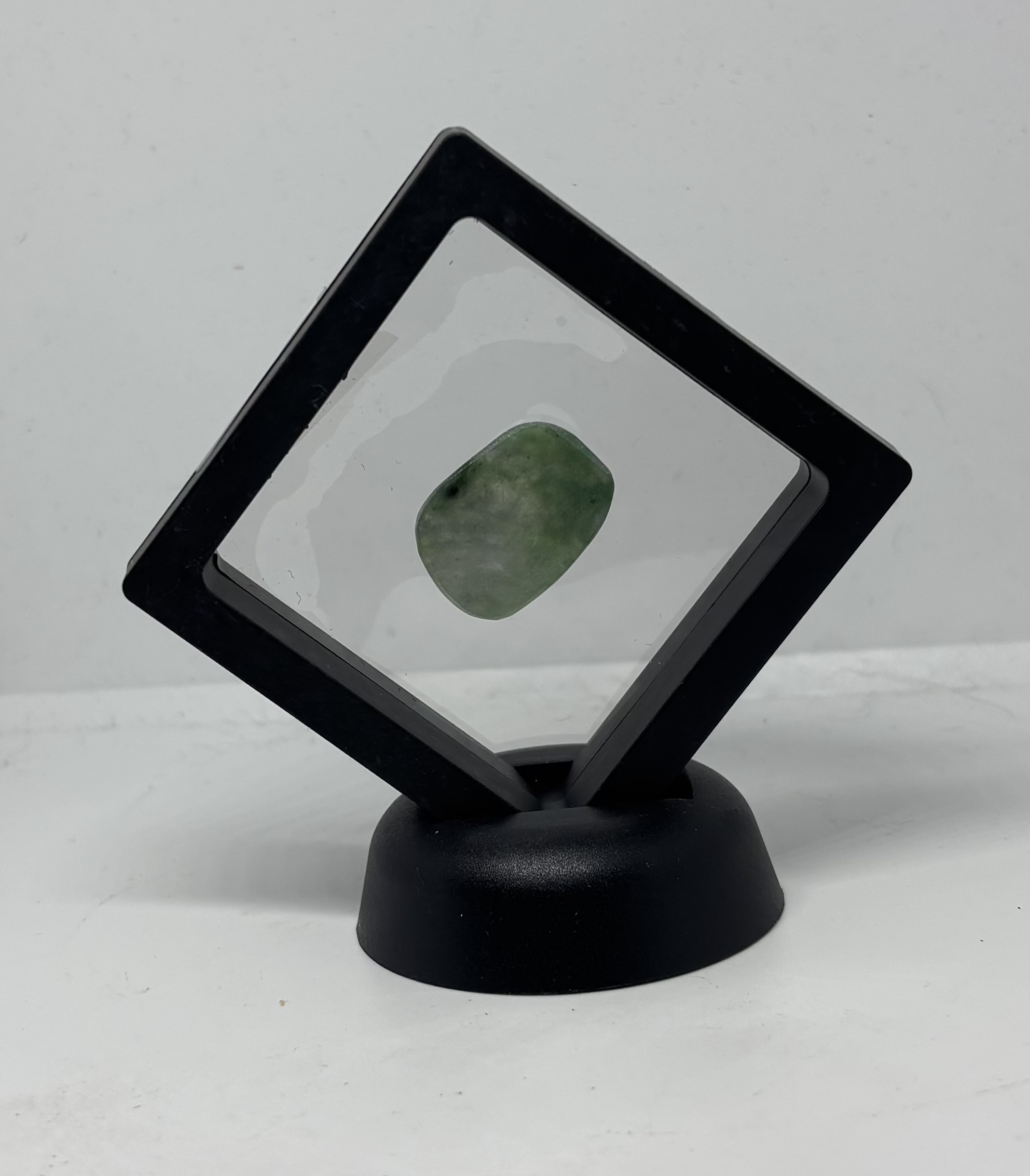
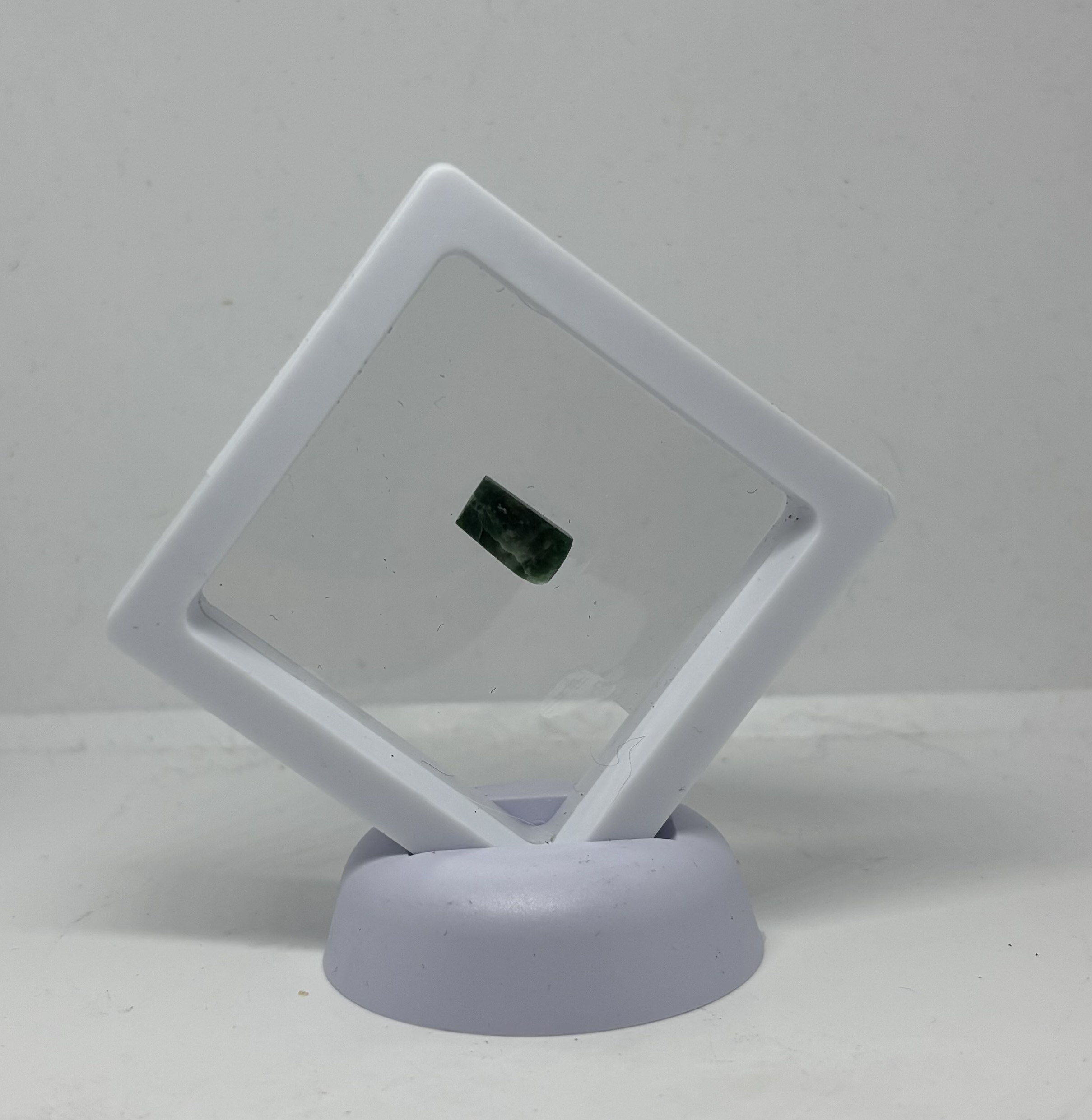
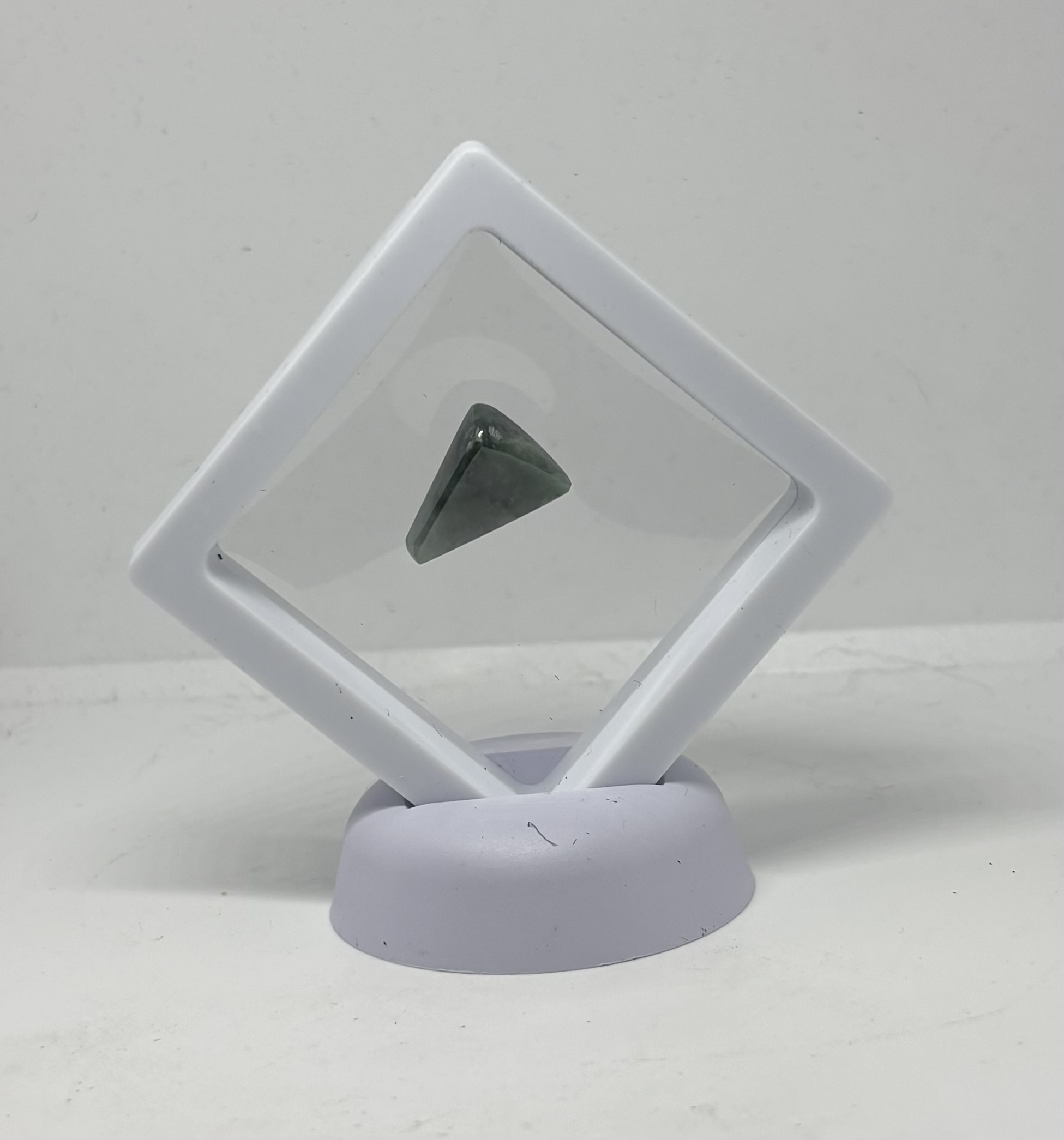
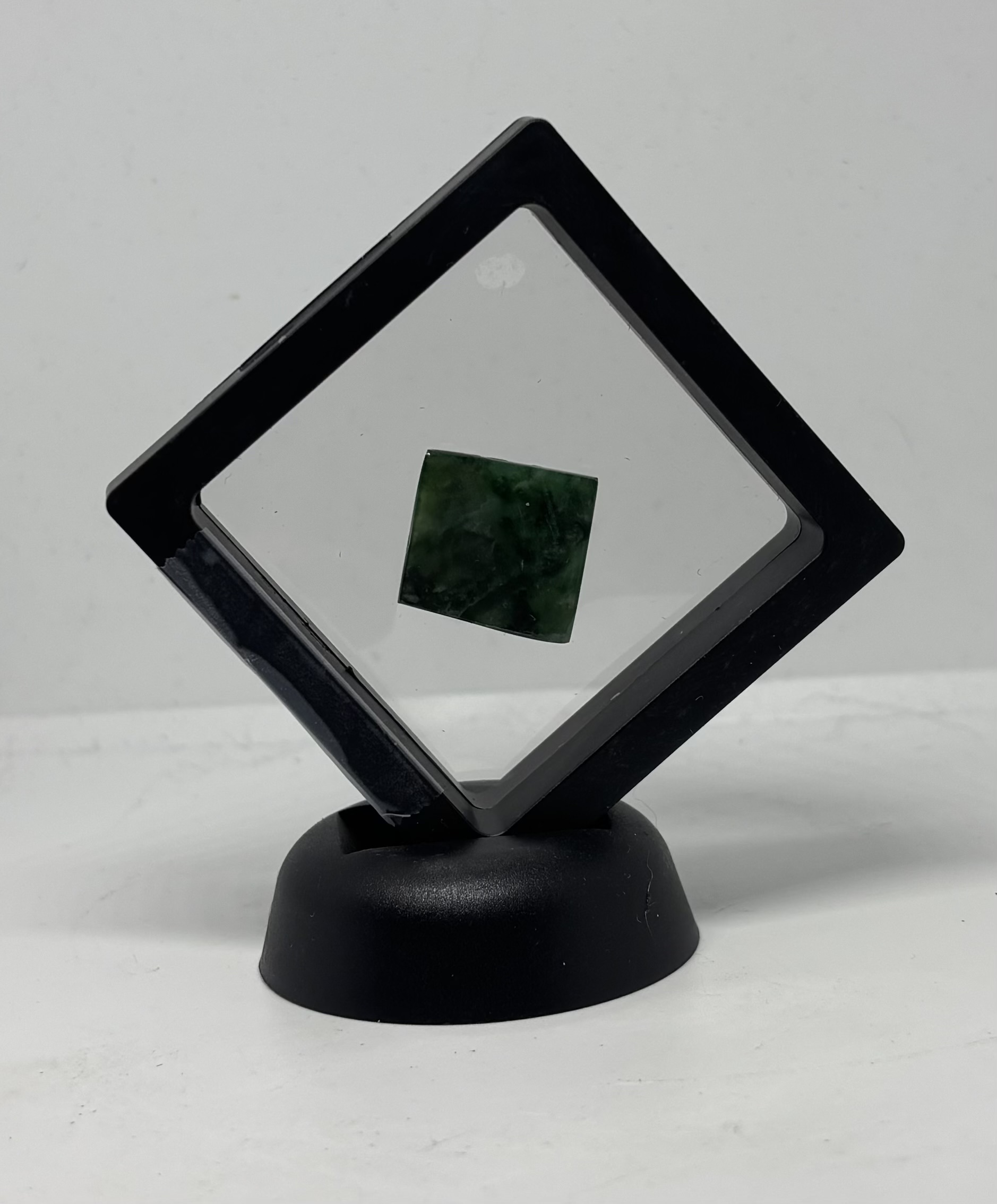
Each specimen showcases the natural beauty, color, and texture of jadeite holdings — carefully selected to highlight the finest qualities of this treasured gemstone.
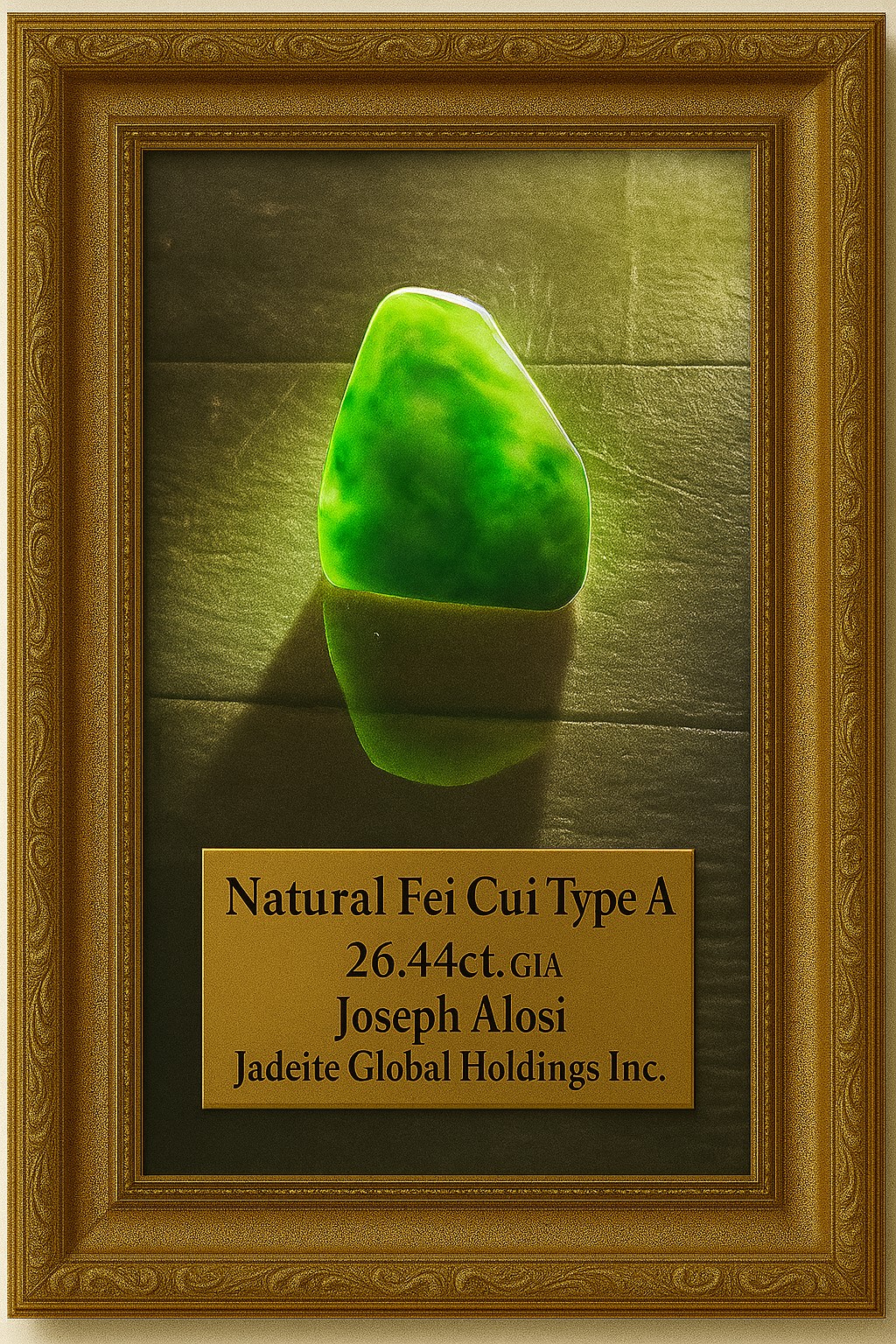
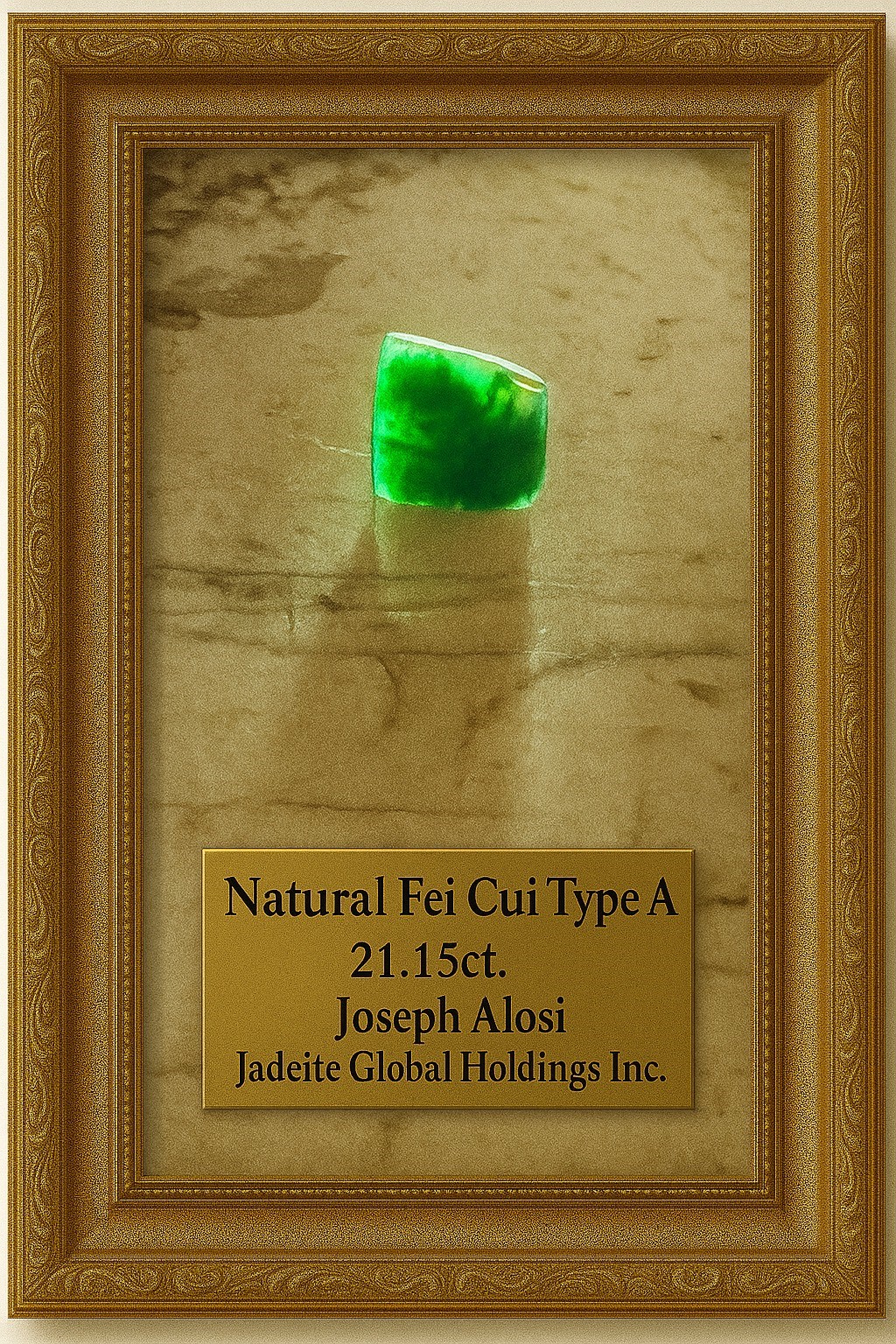
Heart of Hpakant
Estimated Value: $66,100 USD
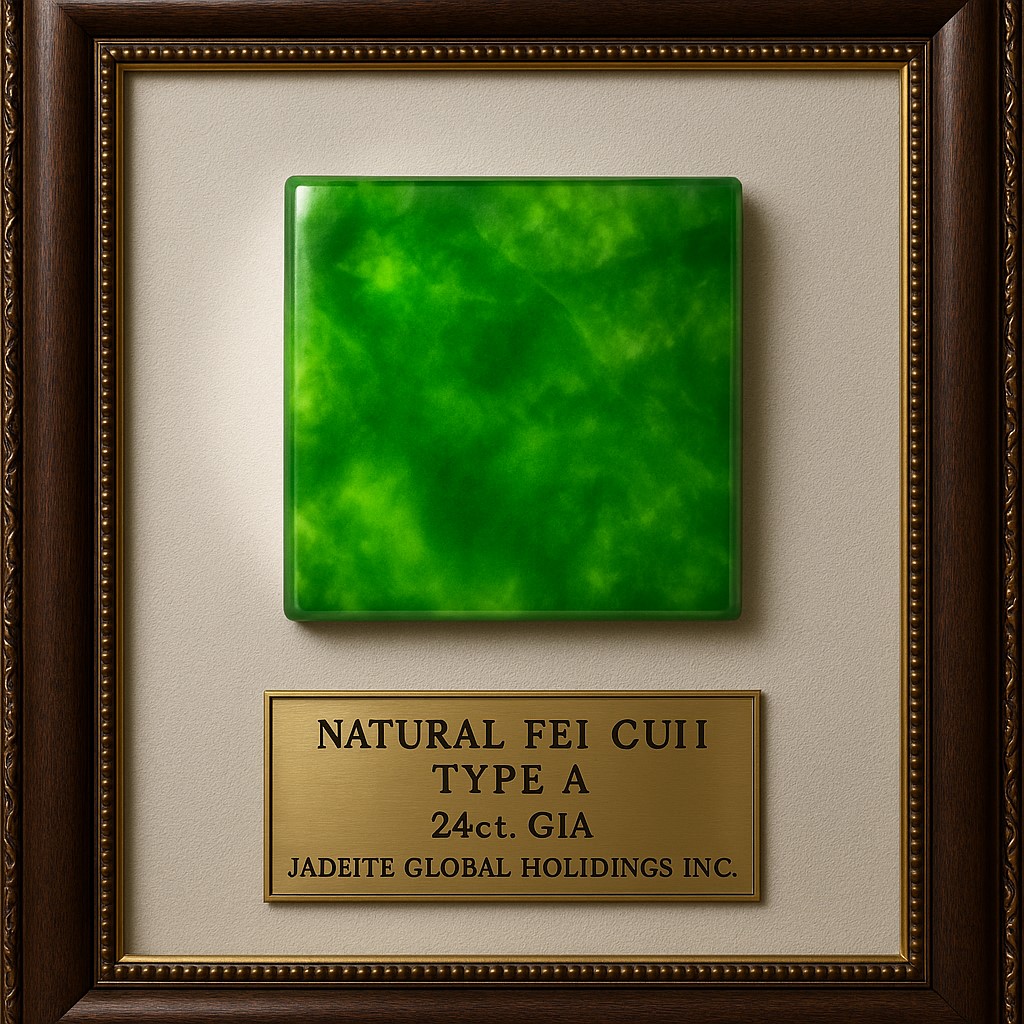
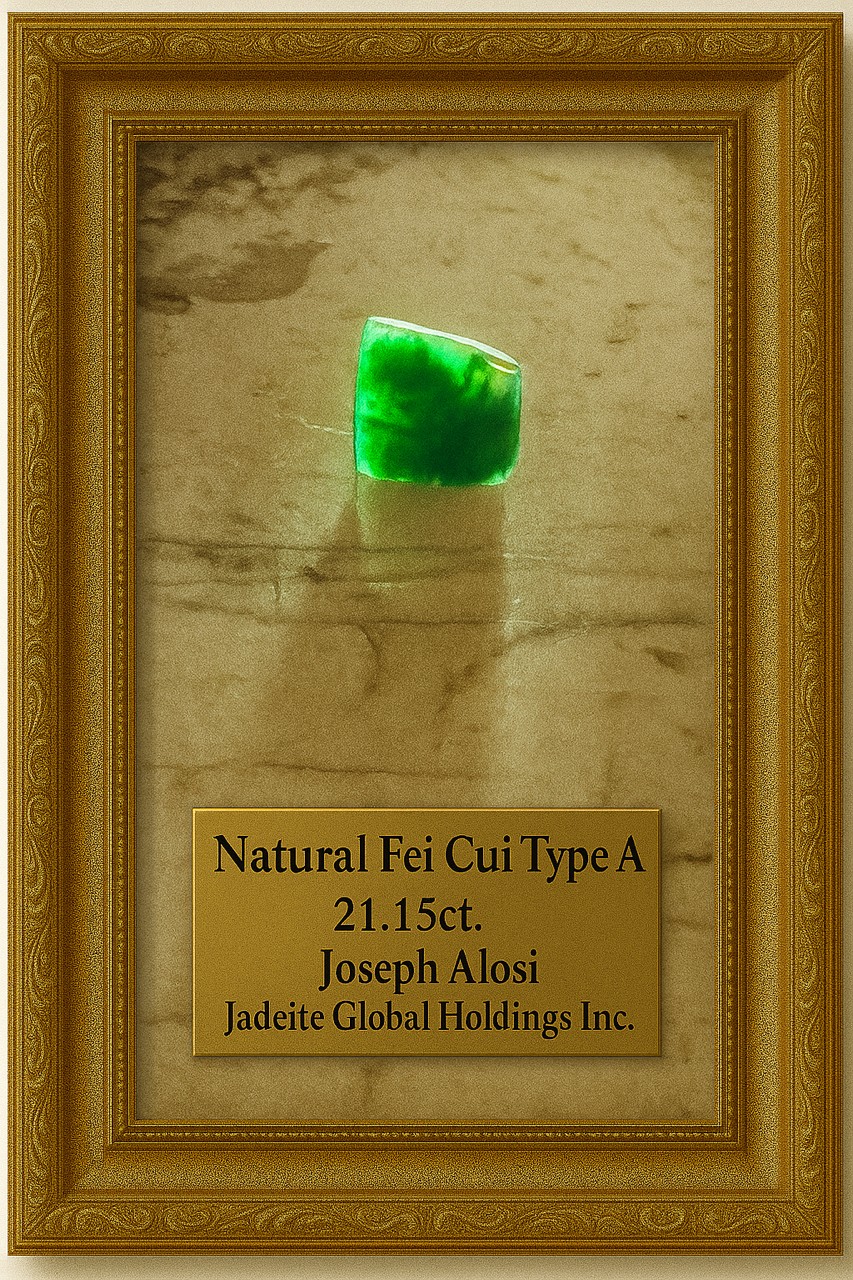
Imperial Ember
Estimated Value: $25,300 USD
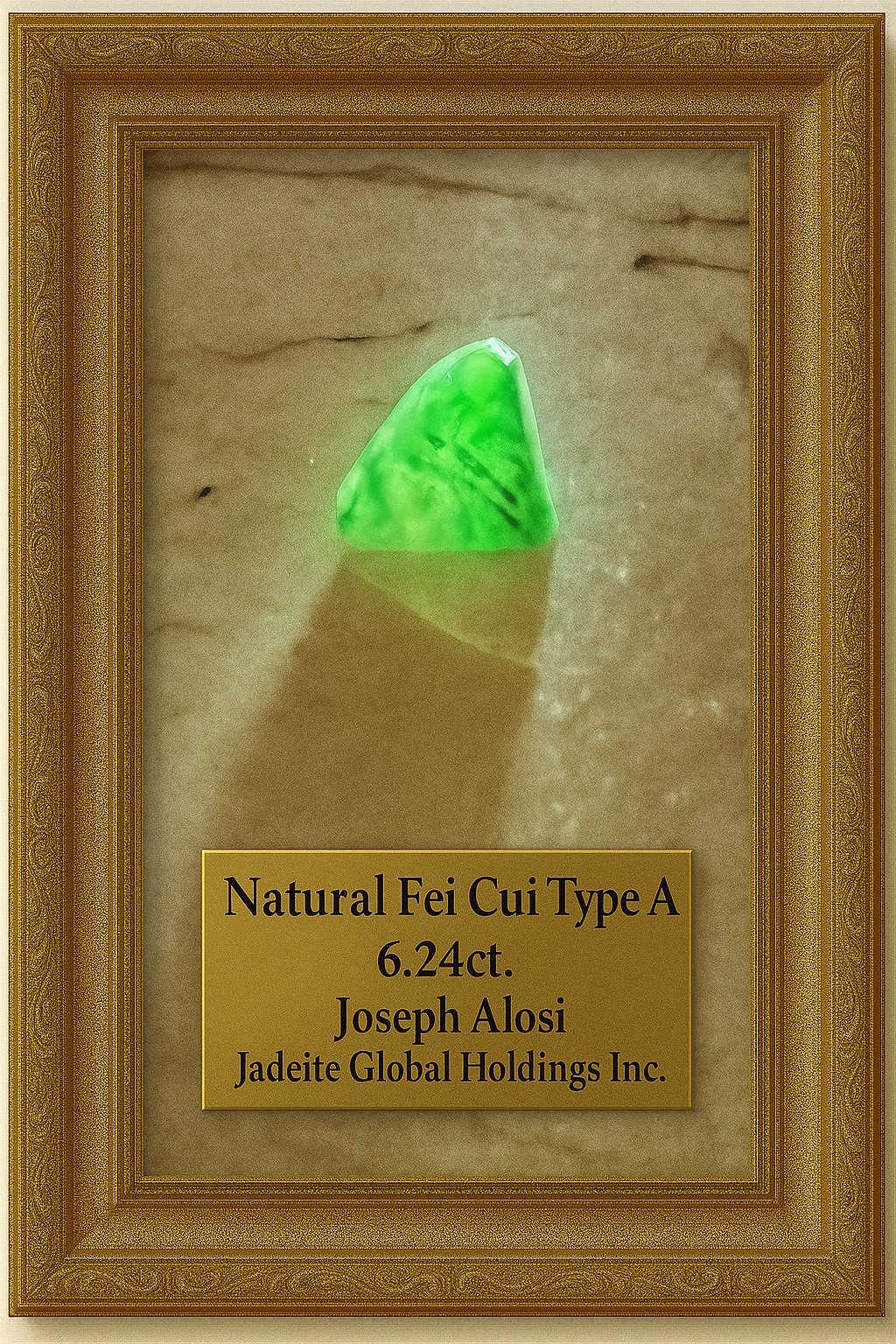
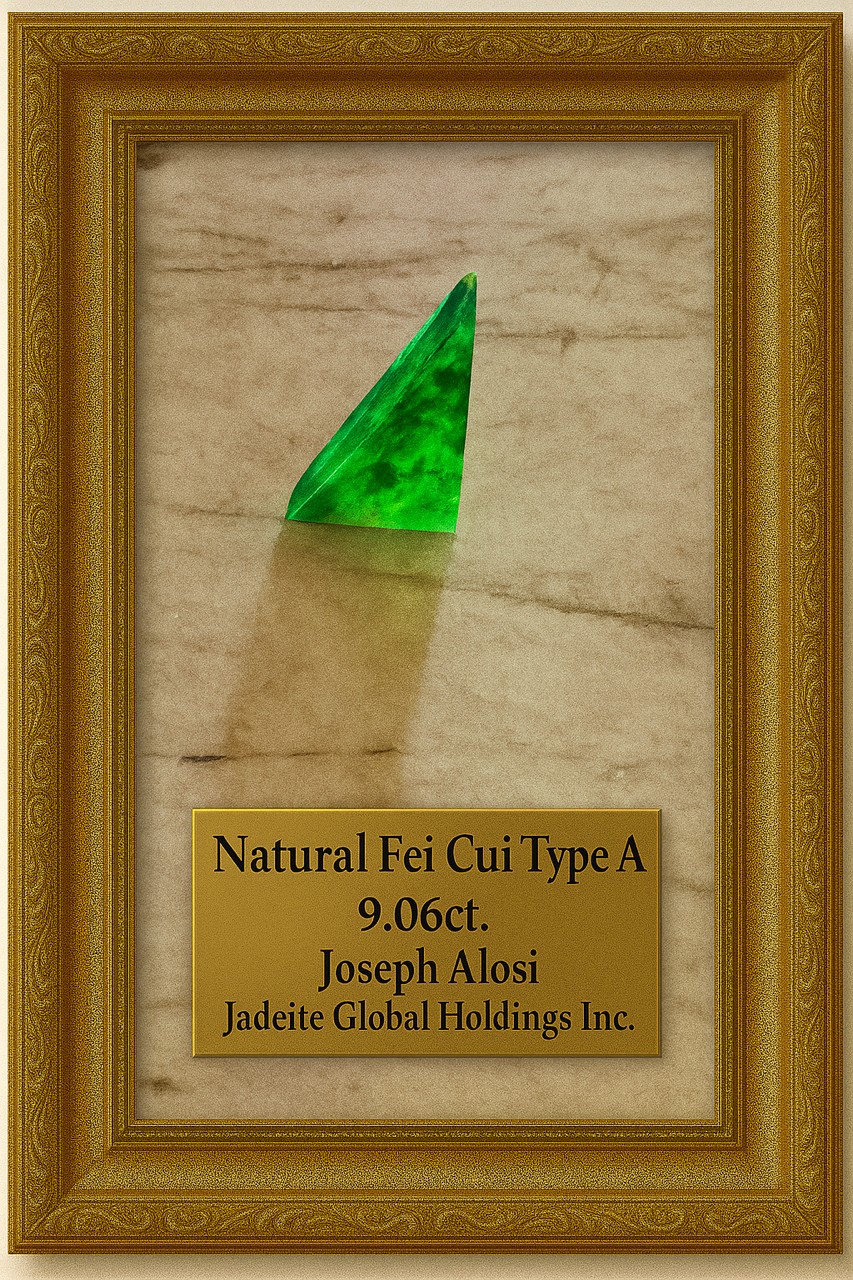
Lightning Shard
Estimated Value: $37,400 USD
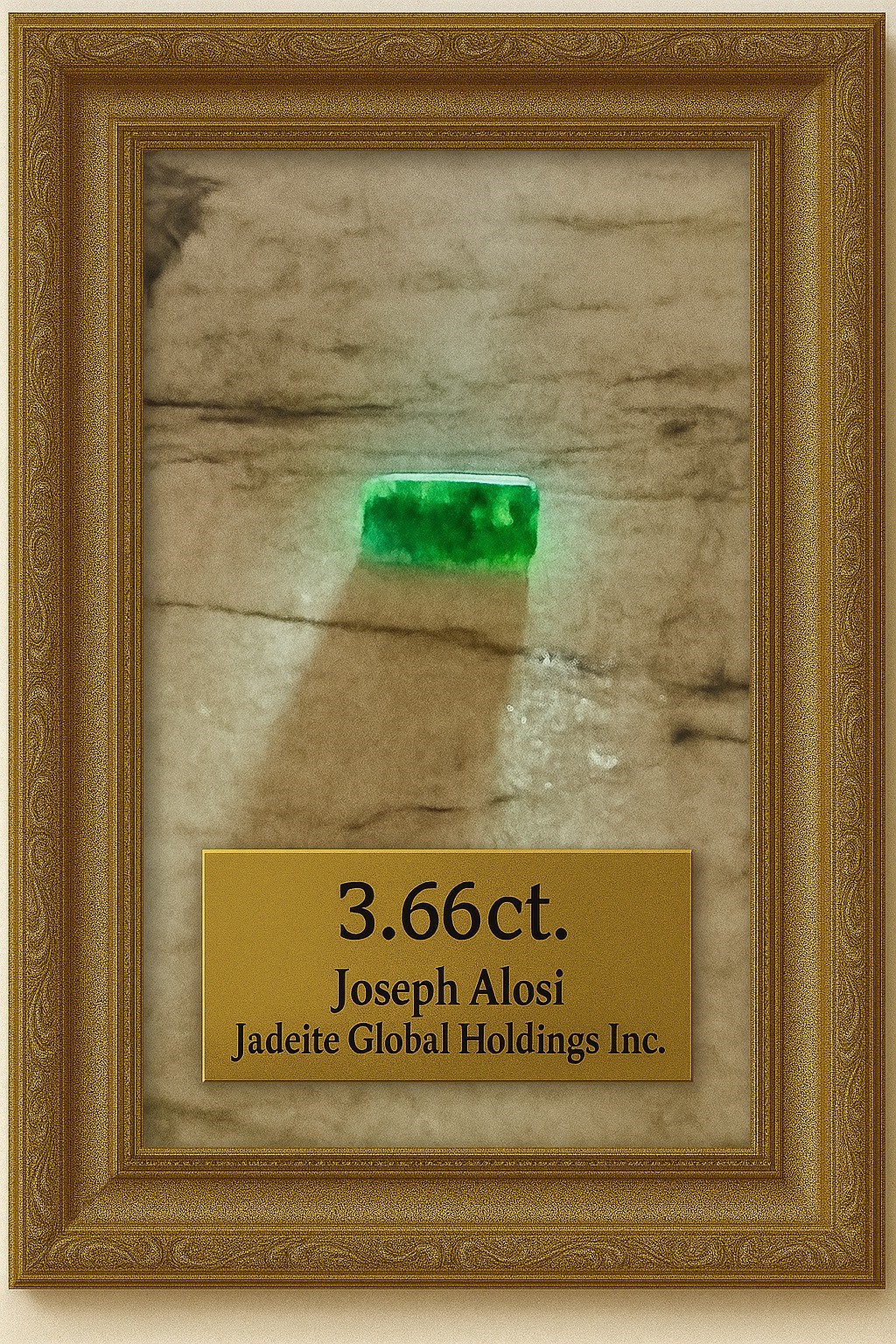
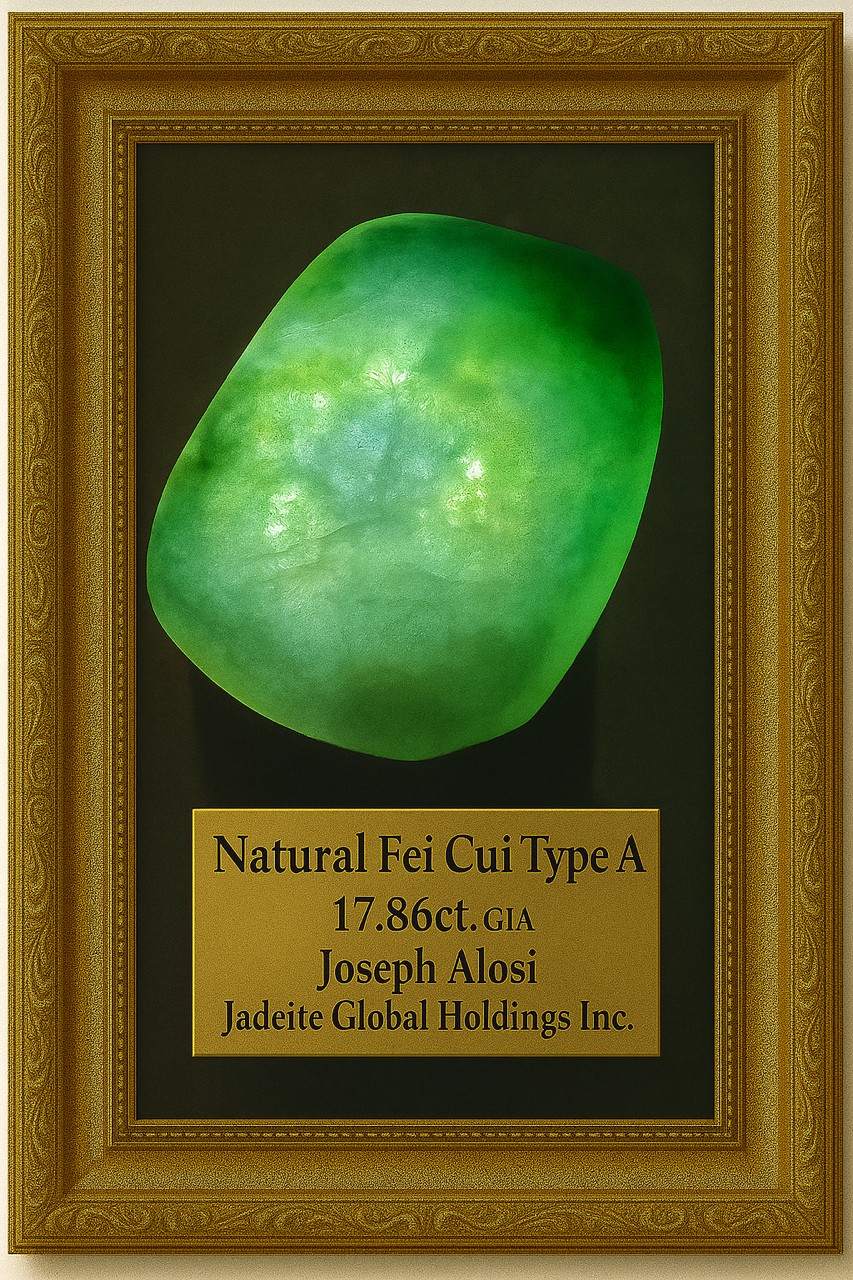
Spring Mountain
Estimated Value: $5,304 USD
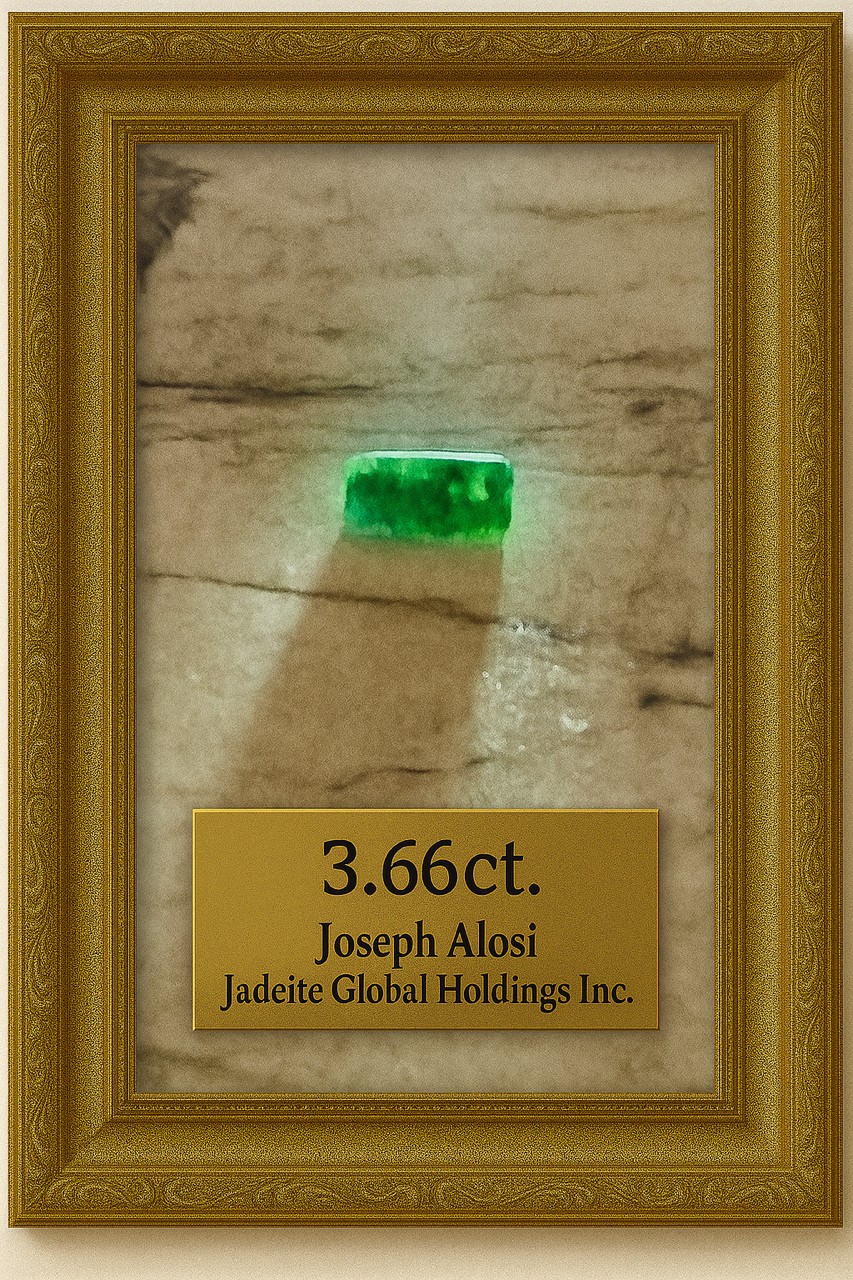
Emerald Flame
Estimated Value: $1,800 USD
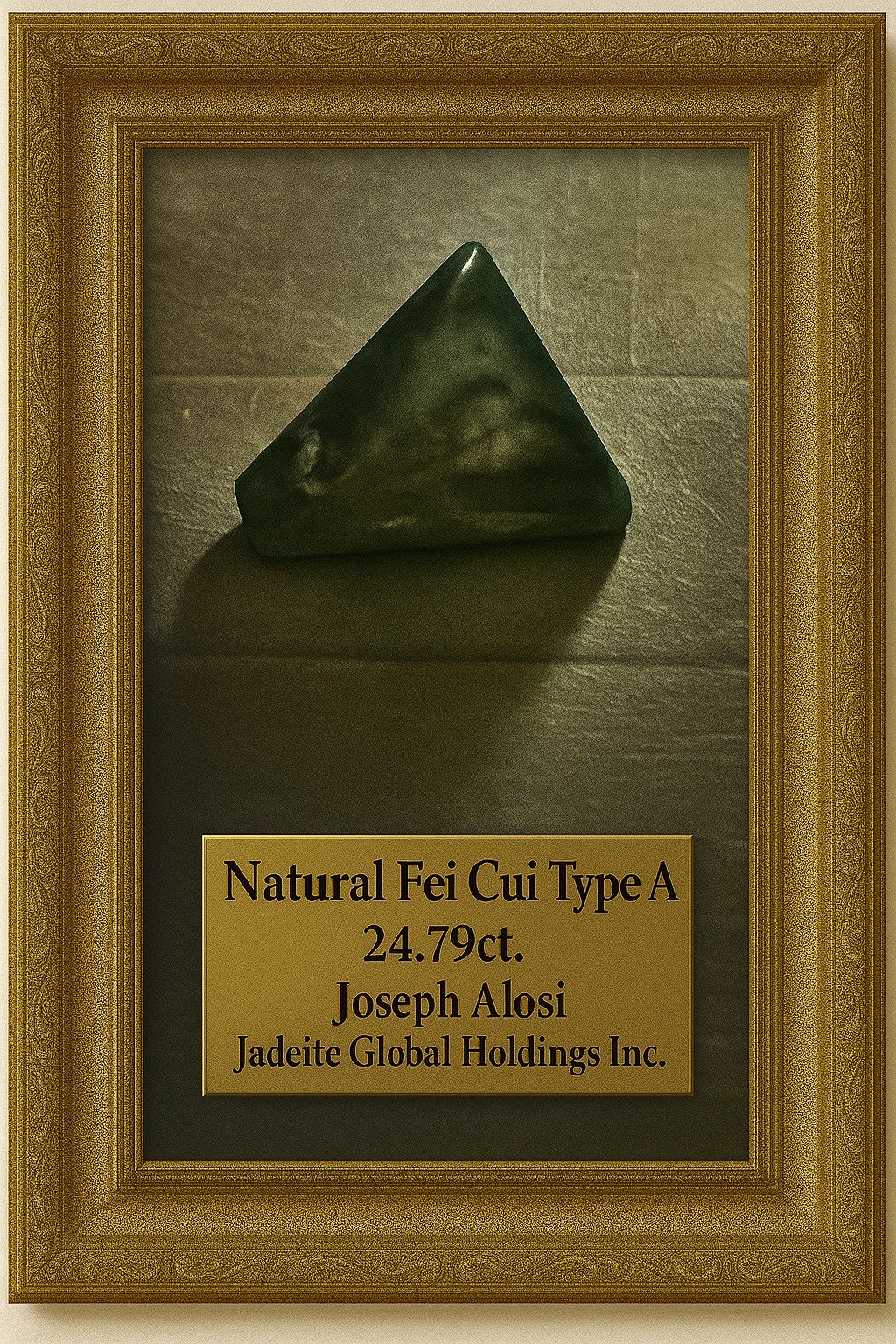
Guardian of the Vault
Estimated Value: $8,600 USD
The jadeite holdings Portfolio
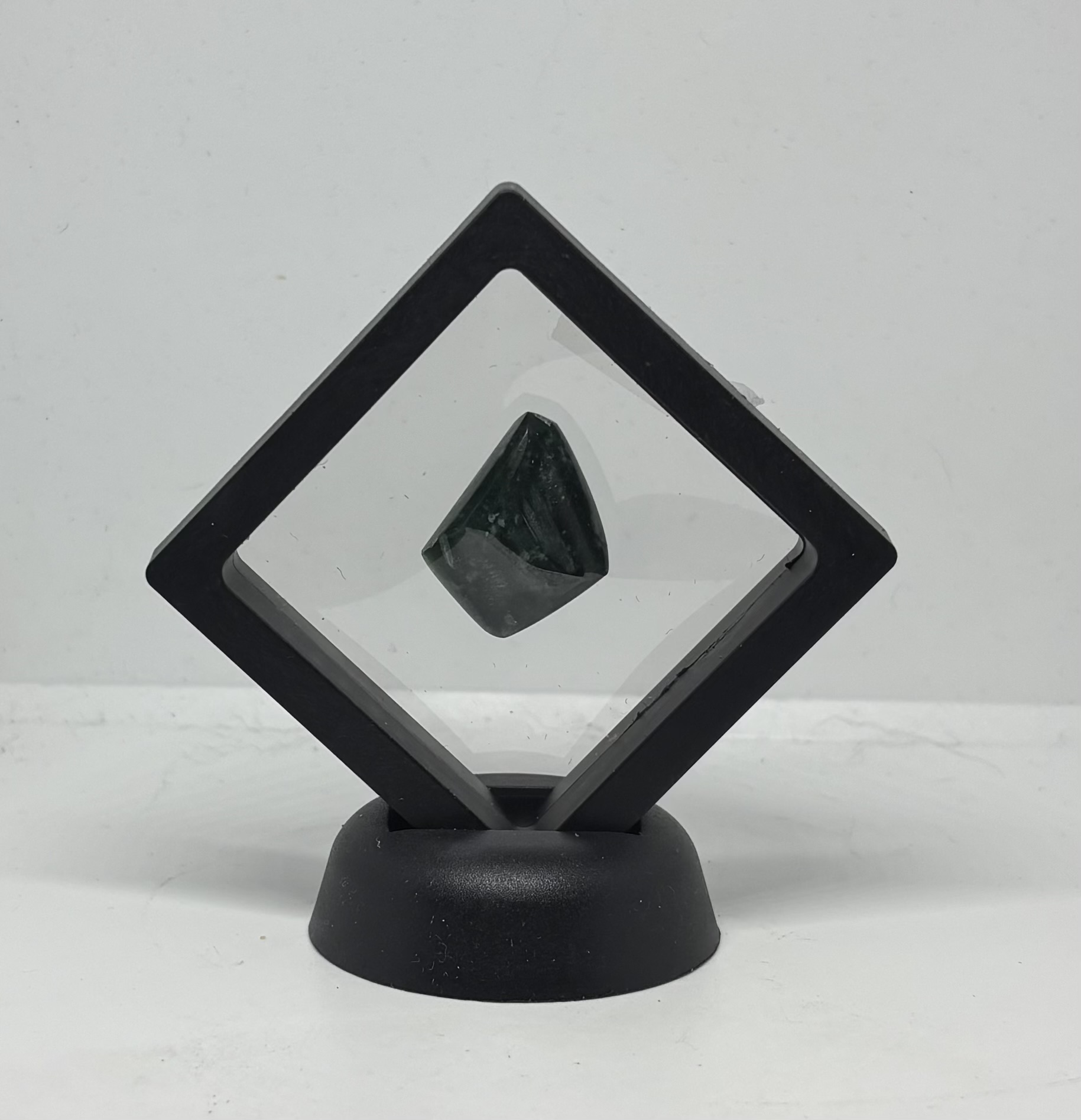
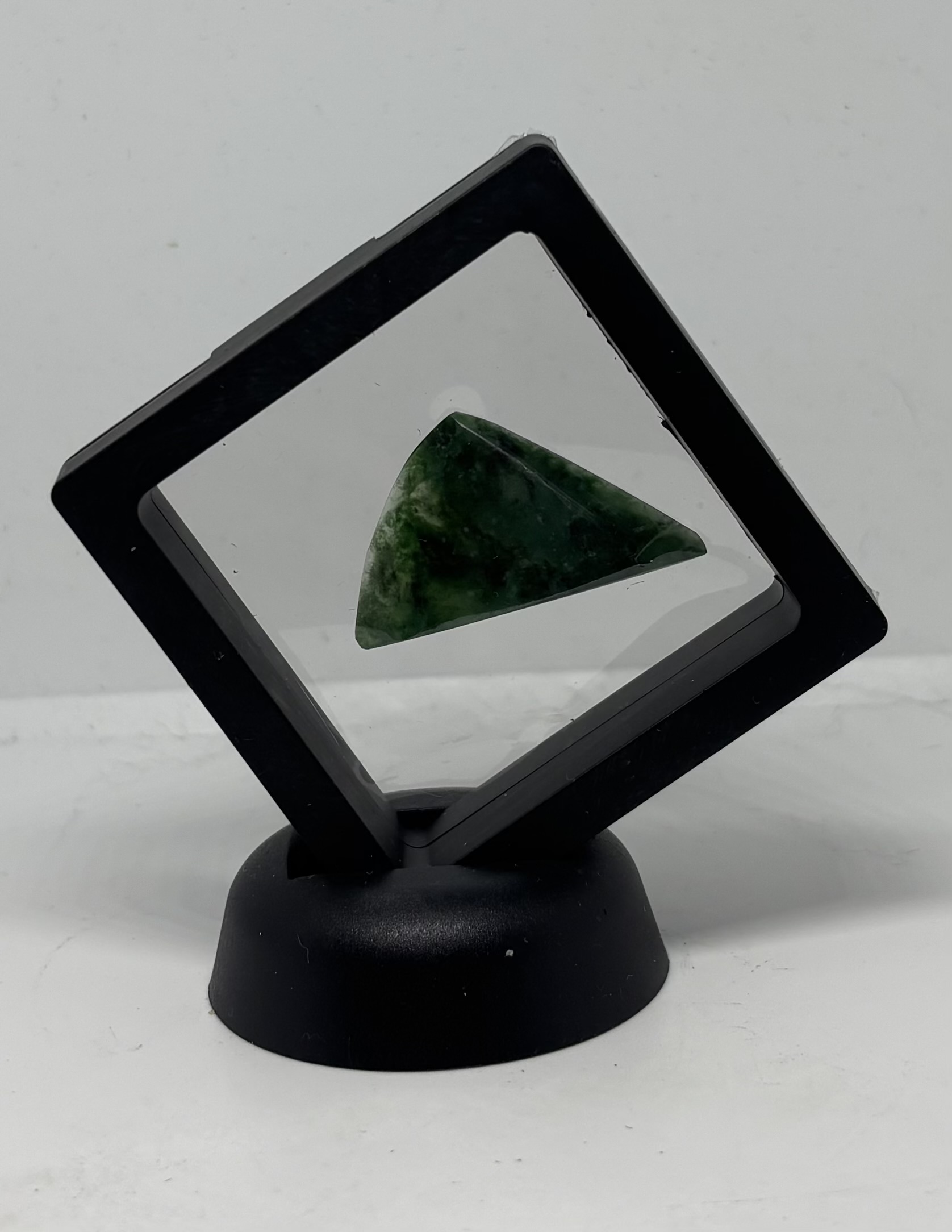
Explore jadeite holdings Portfolio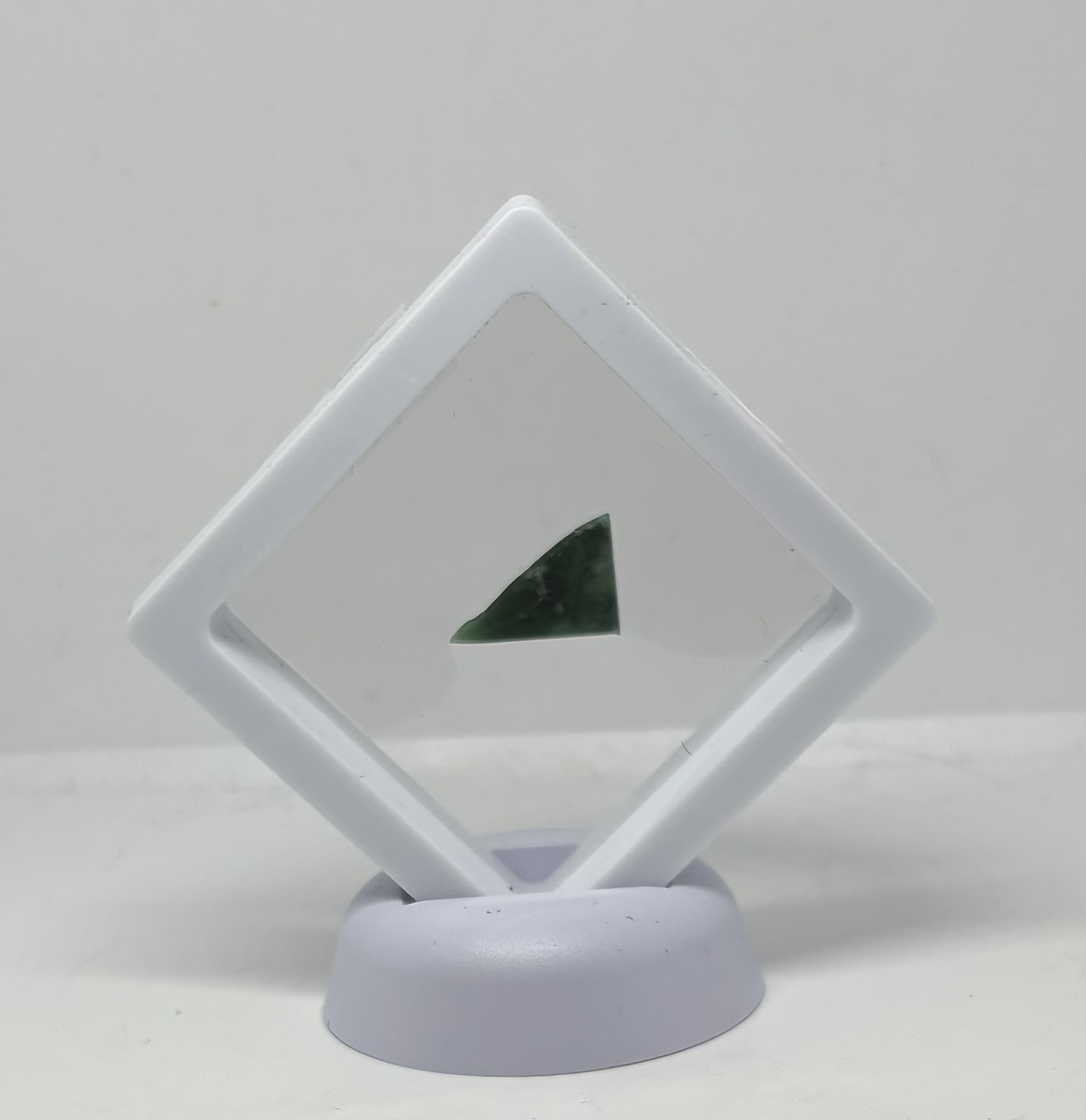
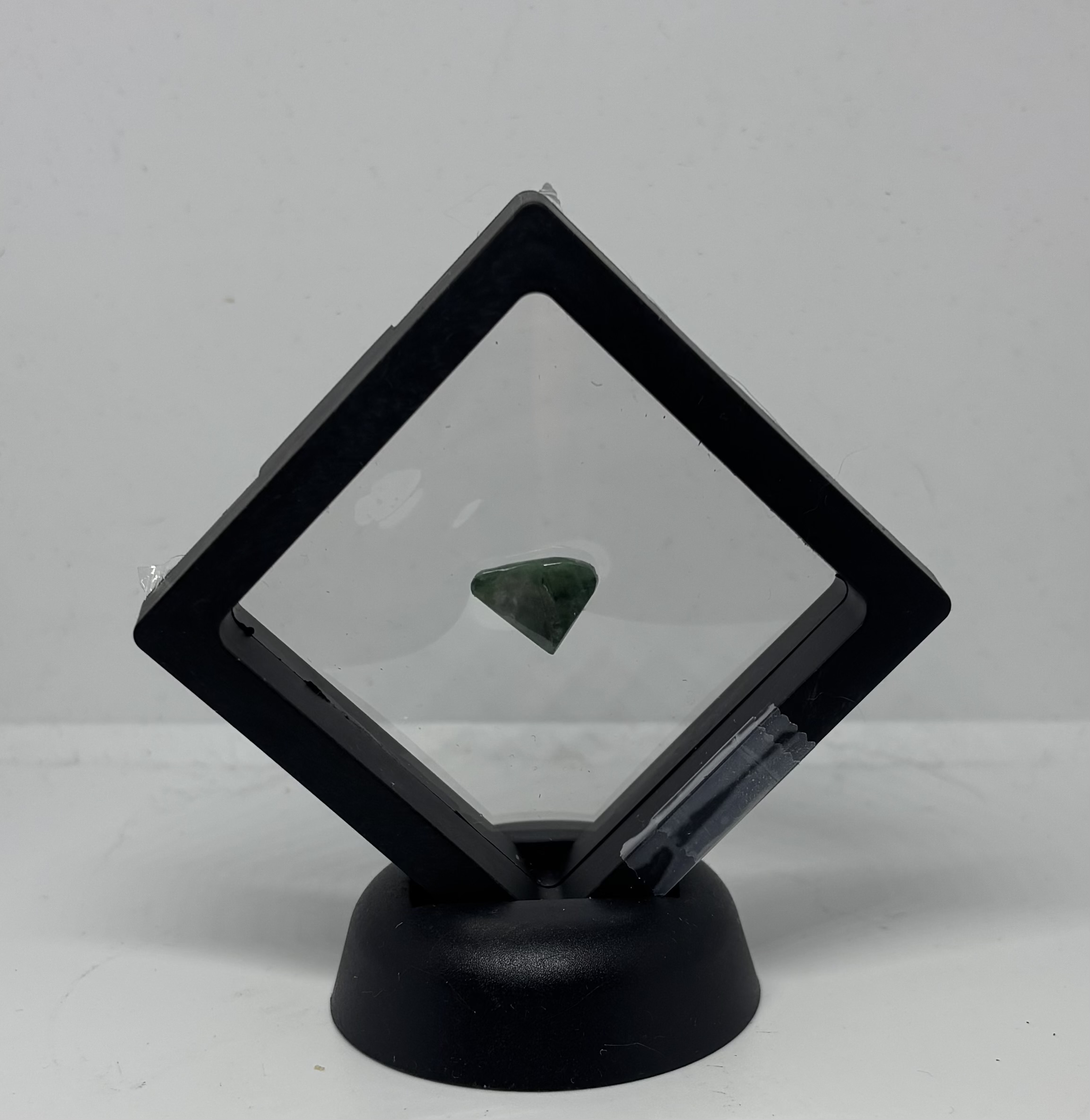
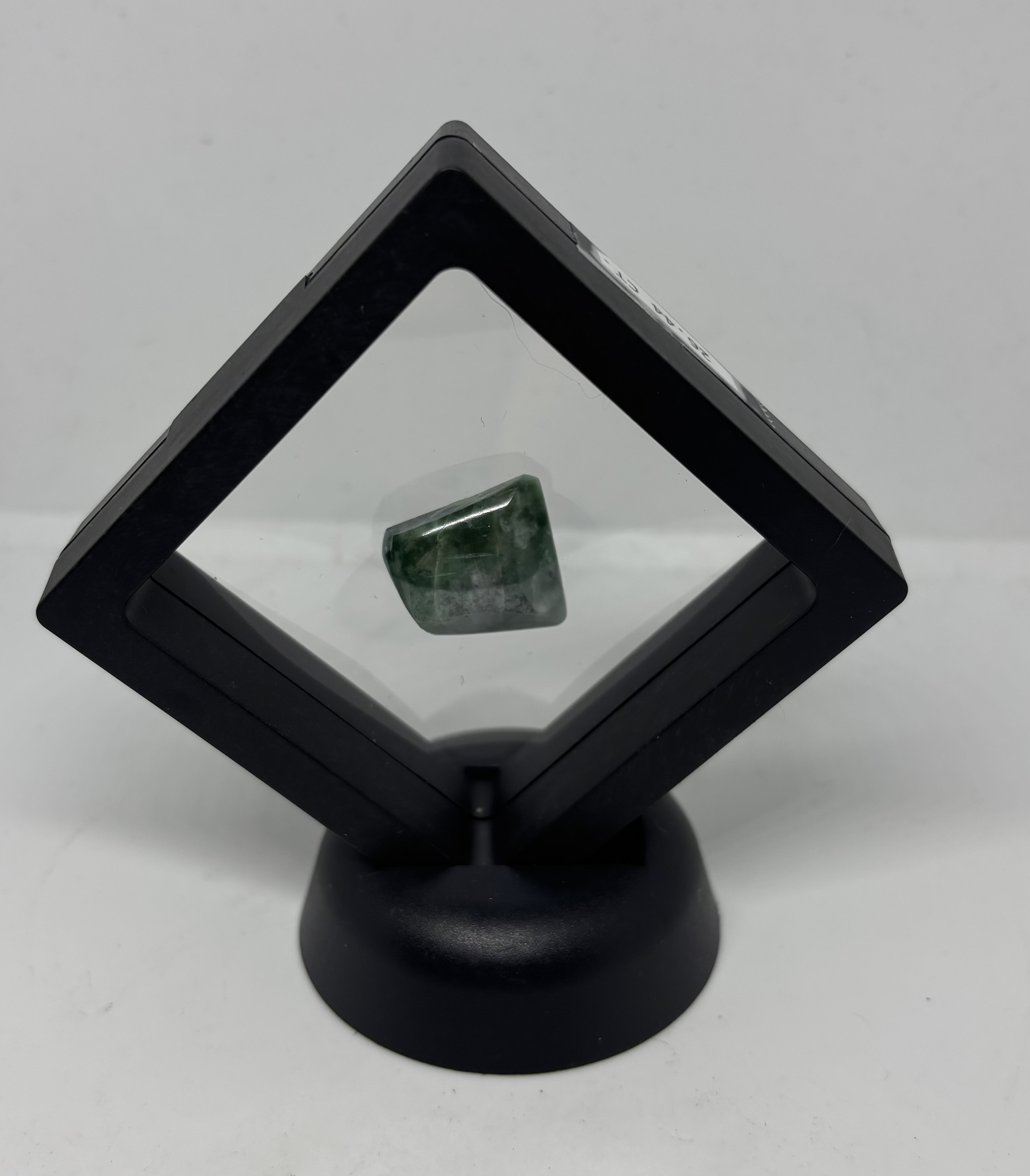
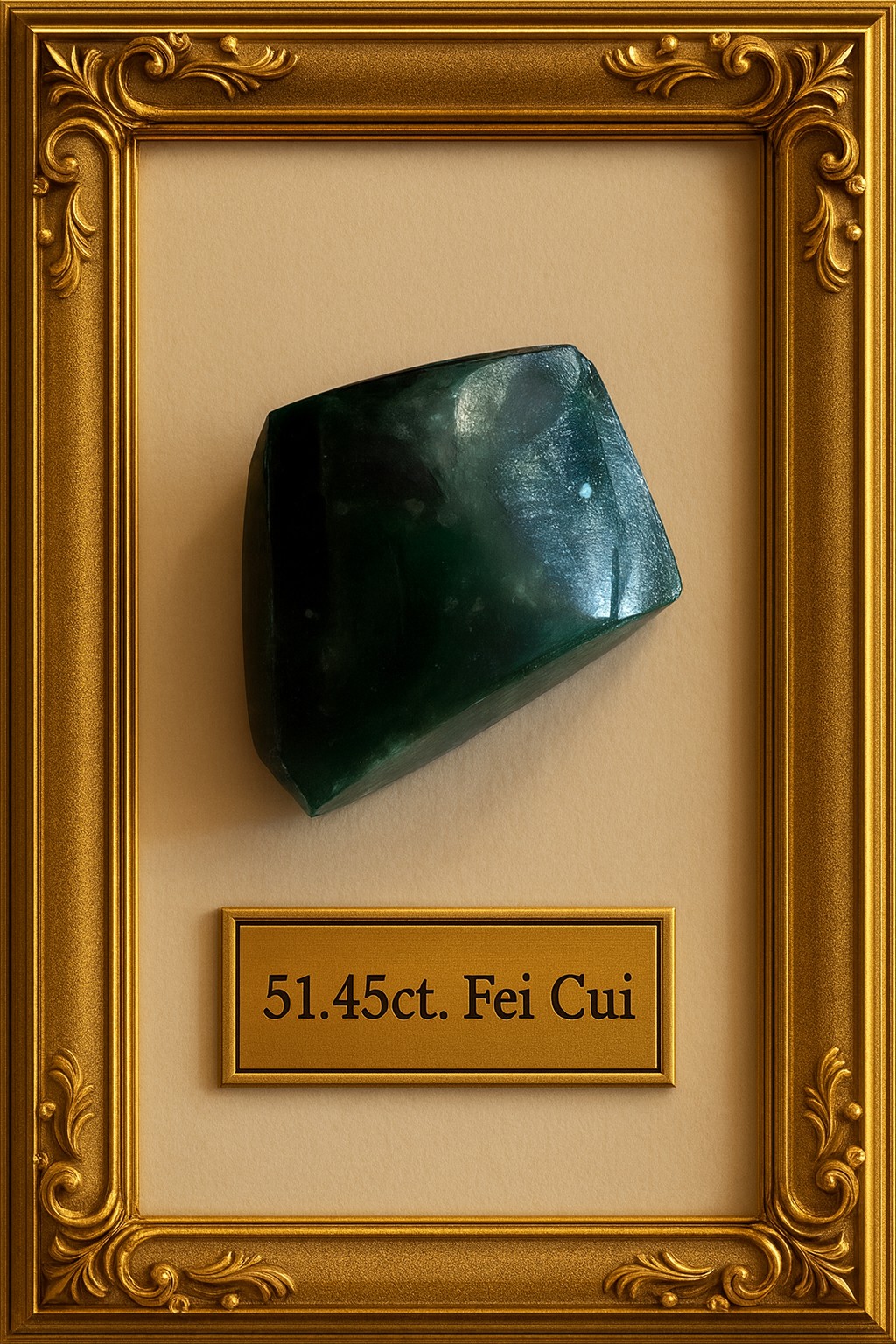
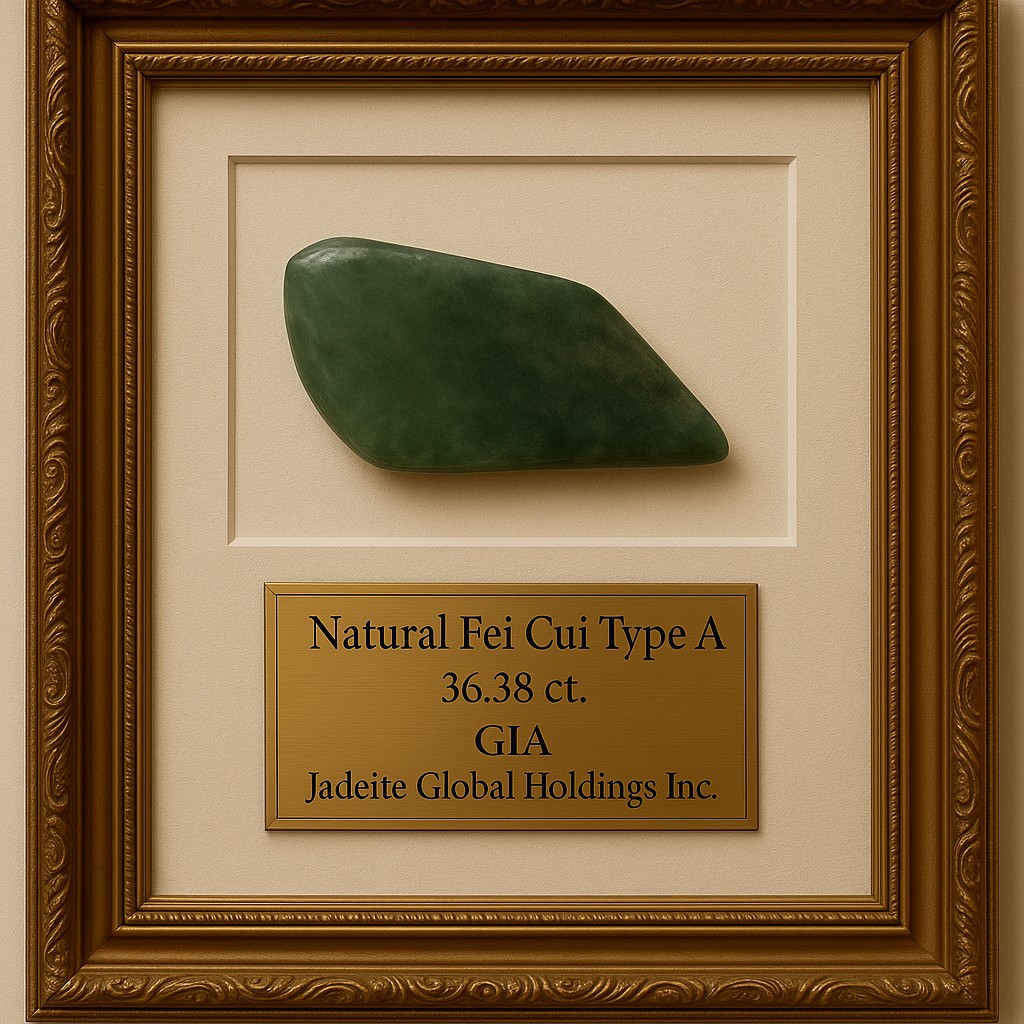

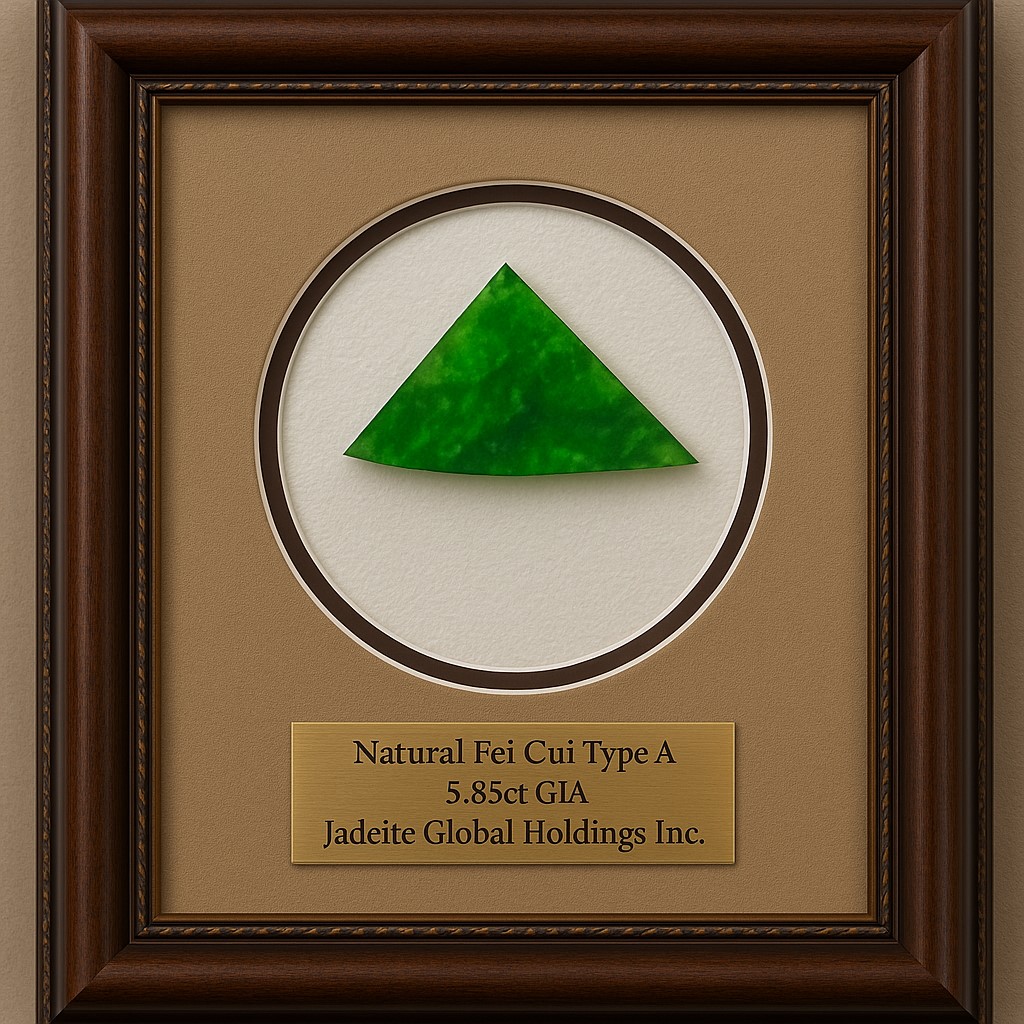
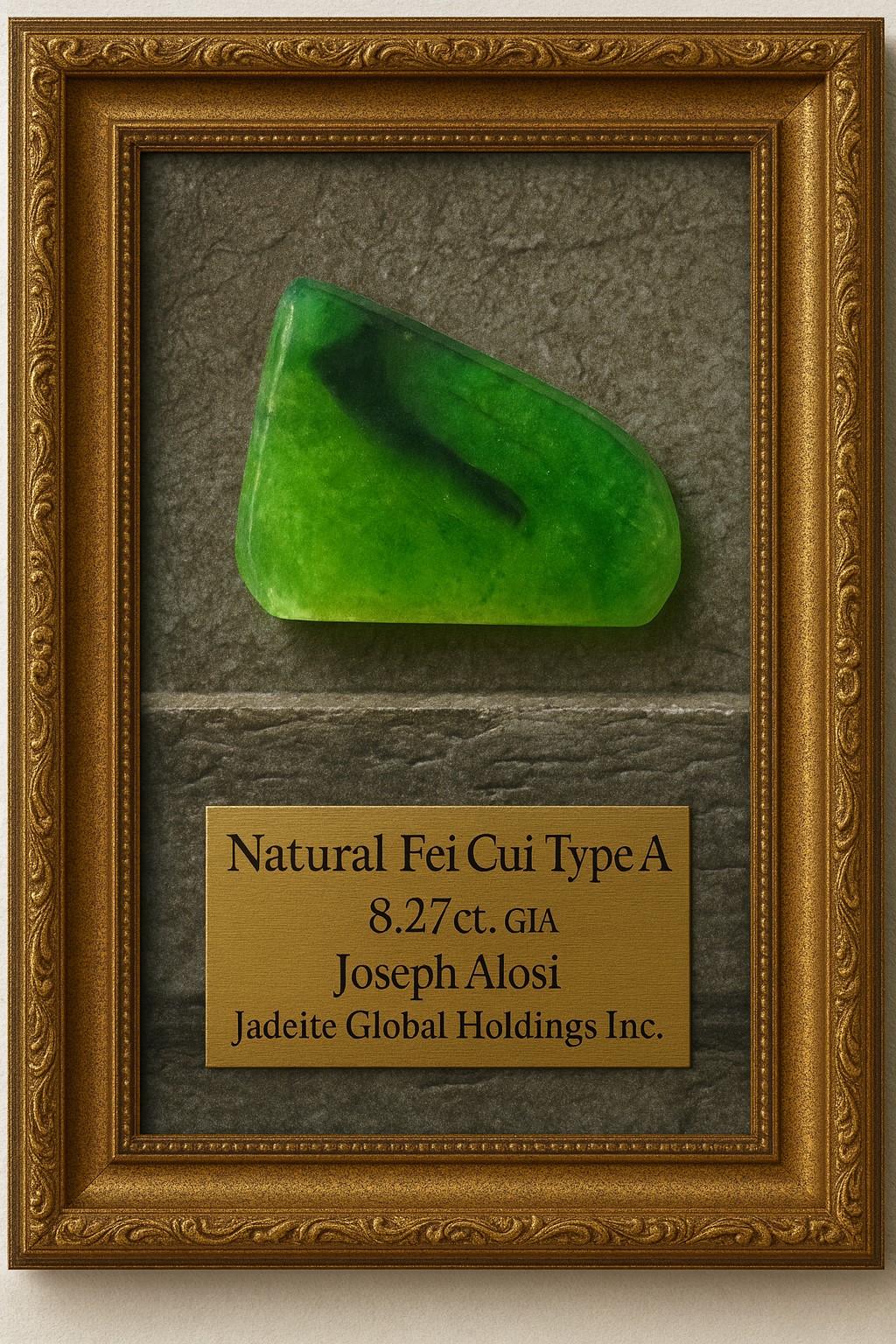
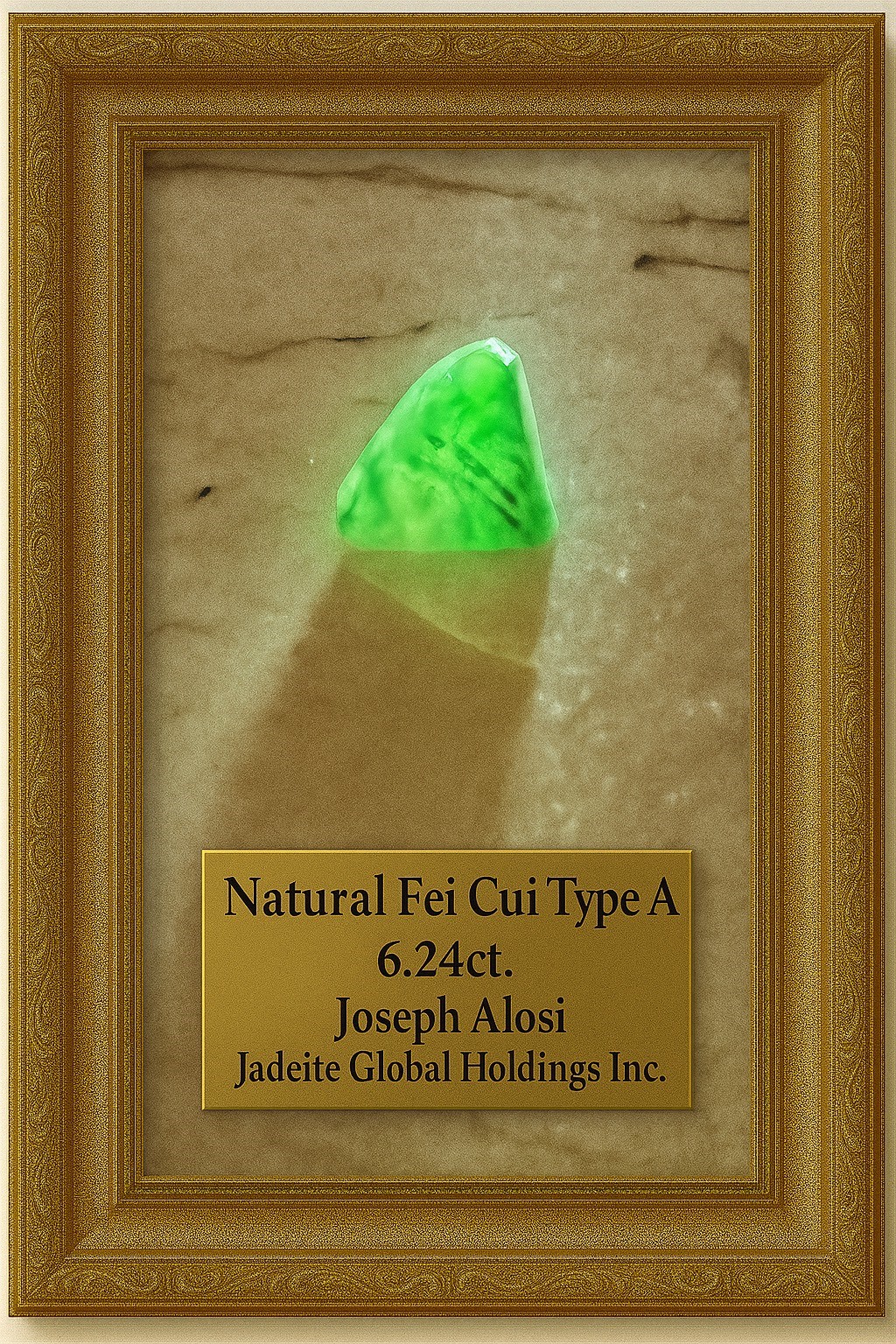
.jpg)
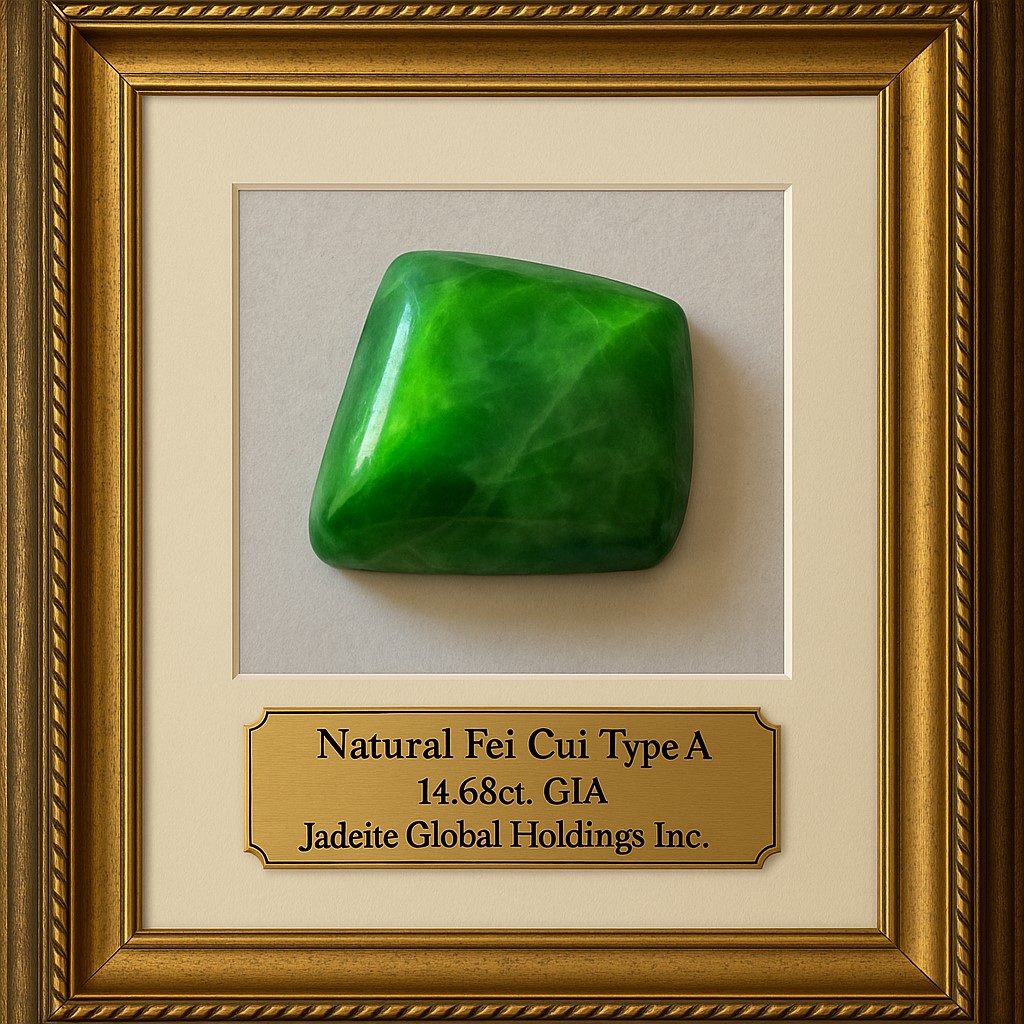
Interested in jadeite holdings?
FEI CUI: THE STONE THAT CHOSE ITS KEEPER
In the mountains of northern Myanmar, where mist clings to jungle ridges and the earth itself hides ancient secrets, the world’s most coveted jade is born. For centuries, emperors, dynasties, and billionaires have pursued this stone — Fei Cui, the luminous green jadeite known as the “Stone of Heaven.” Unlike diamonds, Fei Cui cannot be manufactured, replicated, or mass-produced. It forms under rare geological pressure found almost nowhere on earth. And when it emerges with translucency — glowing as if lit from within — it becomes more than a gemstone. It becomes legend.
Decades ago, during a time when the global jade trade moved quietly through trusted hands rather than public auctions, a man named Tamiya operated within that hidden world. He was not simply a dealer; he was a gatekeeper between the Burmese mines and the international elite. Access to material of true quality required relationships built on honor, intuition, and reputation. Somewhere across oceans and cultures, Tamiya encountered Joseph Alosi — an American entrepreneur with an instinct for recognizing value long before others could see it. What happened next would shape both of their lives.
The transfer was not flashy. There were no headlines, no cameras, no dramatic contracts. Just stones — rough jadeite with untapped potential — passed from one man to another in an act of trust. Tamiya saw something in Alosi: a determination, a resilience, and perhaps a destiny intertwined with the jade itself. In that moment, the stones changed guardians. What Alosi received was more than mineral material. It was a future.
Years passed. Life unfolded with triumphs and hardships. Alosi endured personal battles, health crises, and challenges that would have broken many men. Yet through it all, the jade remained — silent, patient, waiting. When modern gemological testing eventually confirmed the material as natural Type-A jadeite consistent with Burmese origin, the magnitude of what had been preserved became undeniable. These were not ordinary stones. They were survivors of history — geological miracles carried through human trust.
Hollywood loves stories about treasure, but the real power of this story is not the jade itself. It is the human journey surrounding it. A warrior-spirited Marine veteran. A businessman who refused to quit. A man who believed that faith and perseverance could carry him through the darkest nights. The jade became a symbol — proof that sometimes the greatest gifts arrive quietly, recognized only by those willing to believe.
Today, the Fei Cui that passed from Tamiya to Alosi stands as a bridge between worlds: East and West, past and future, earth and spirit. Its value is measured not only in dollars but in survival, legacy, and destiny. Because in the end, this is not just the story of a gemstone.
It is the story of a man chosen to protect it until the right moment in time.
And that moment… may only be beginning.
Contact Us